Pubs and Breweries in Gloucestershire Past and Present
Speech House, Forest of Dean
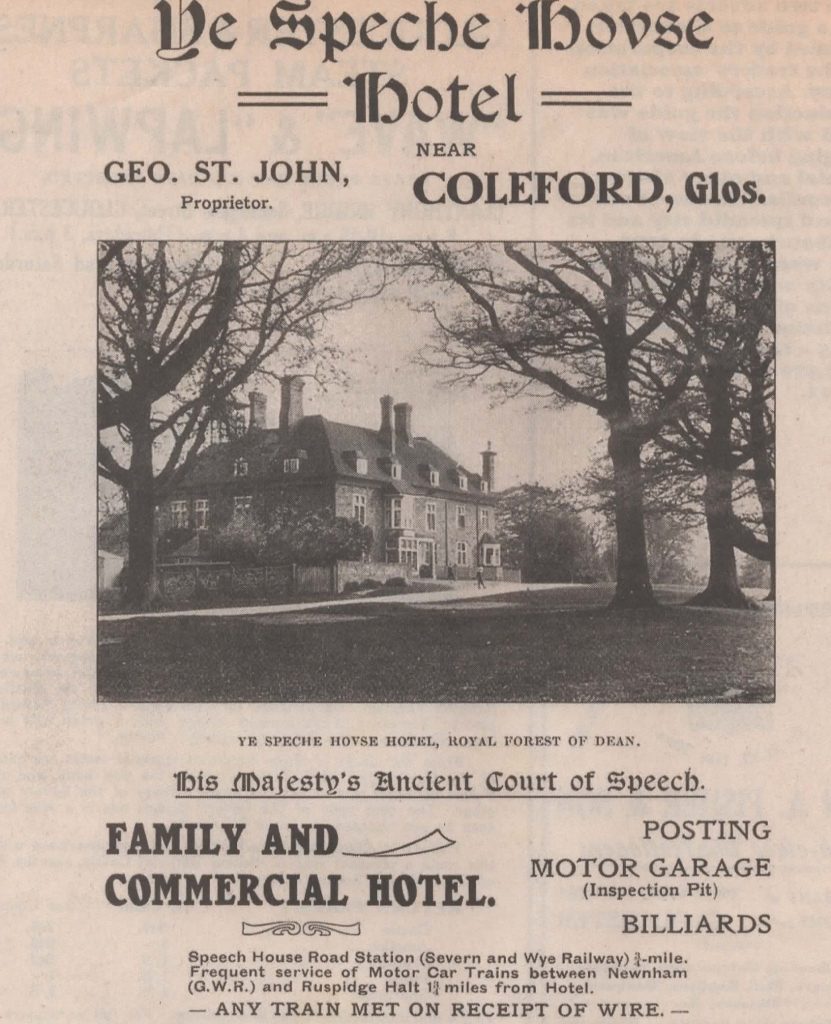
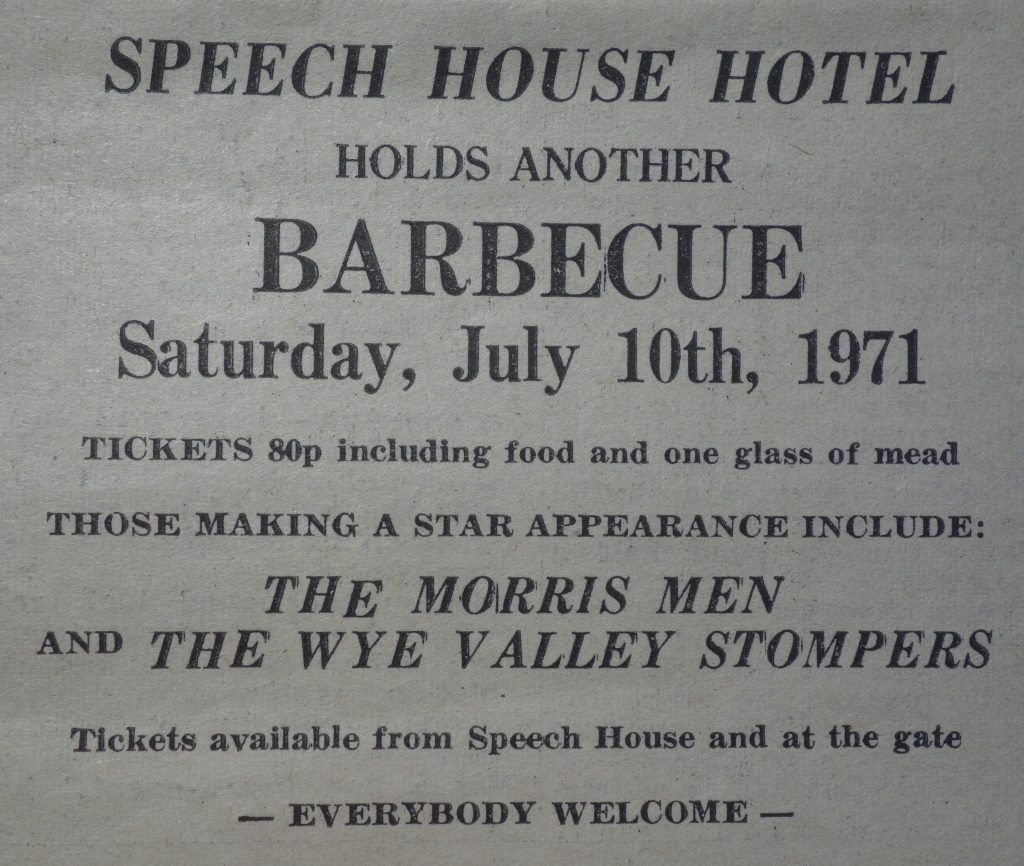
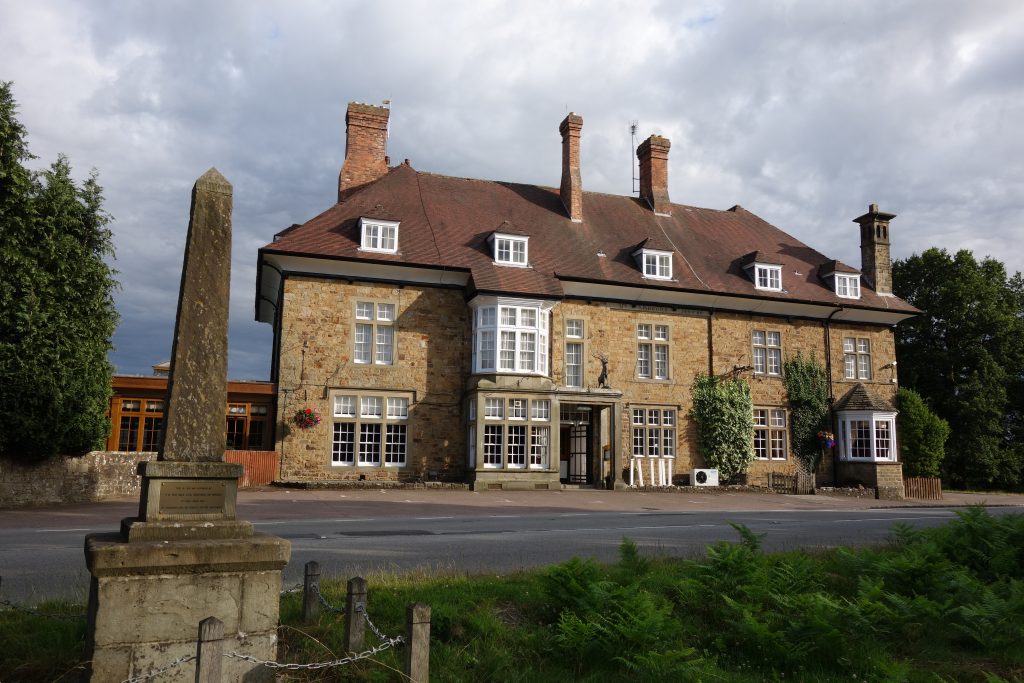
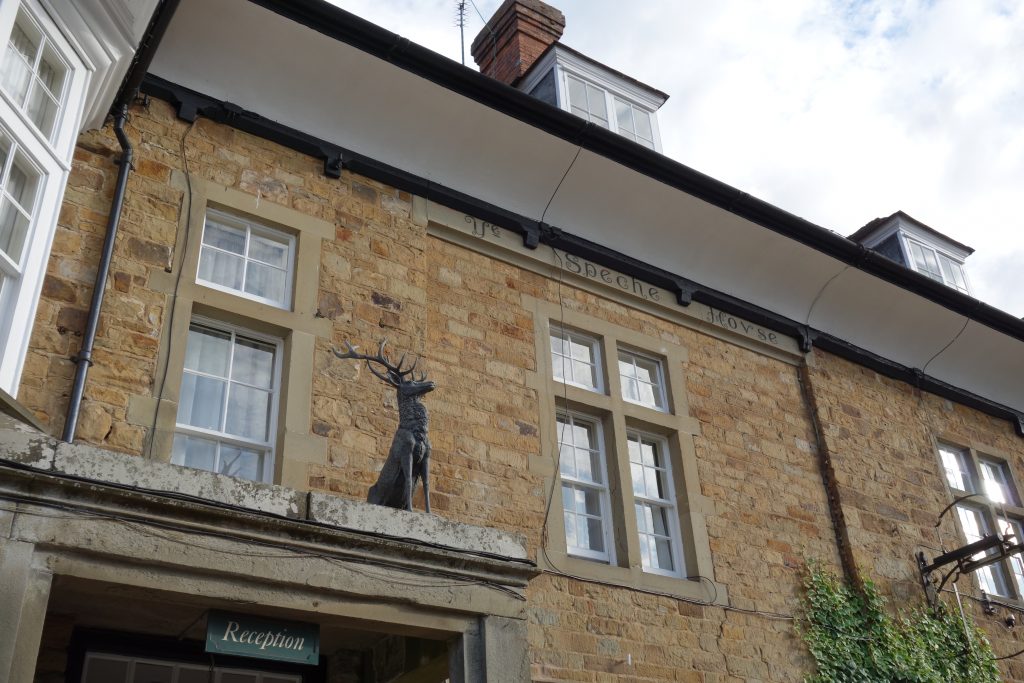
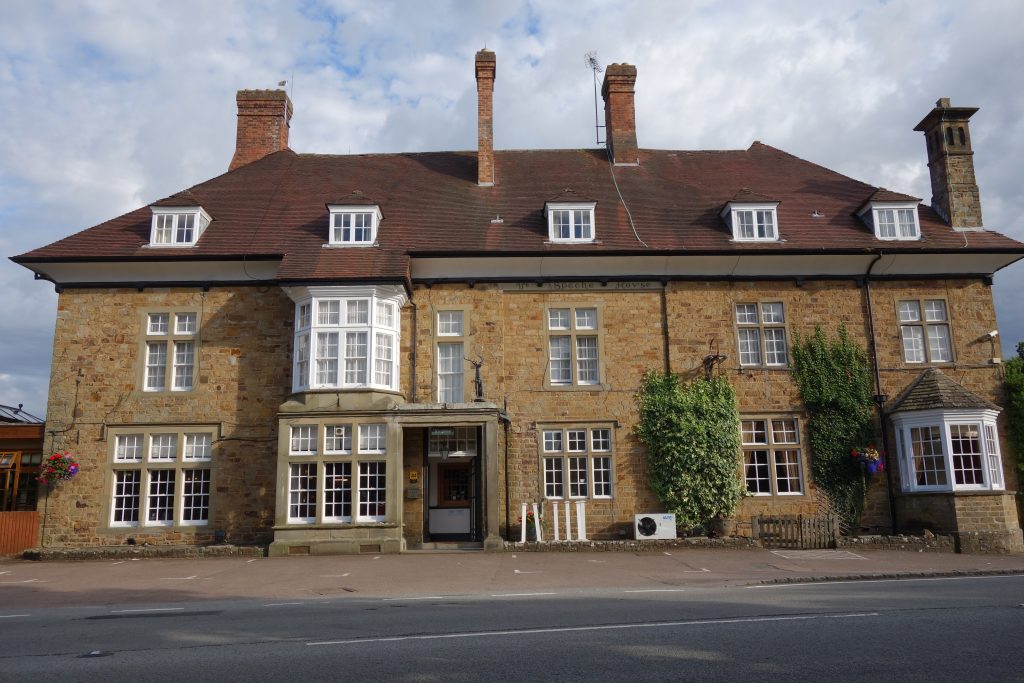
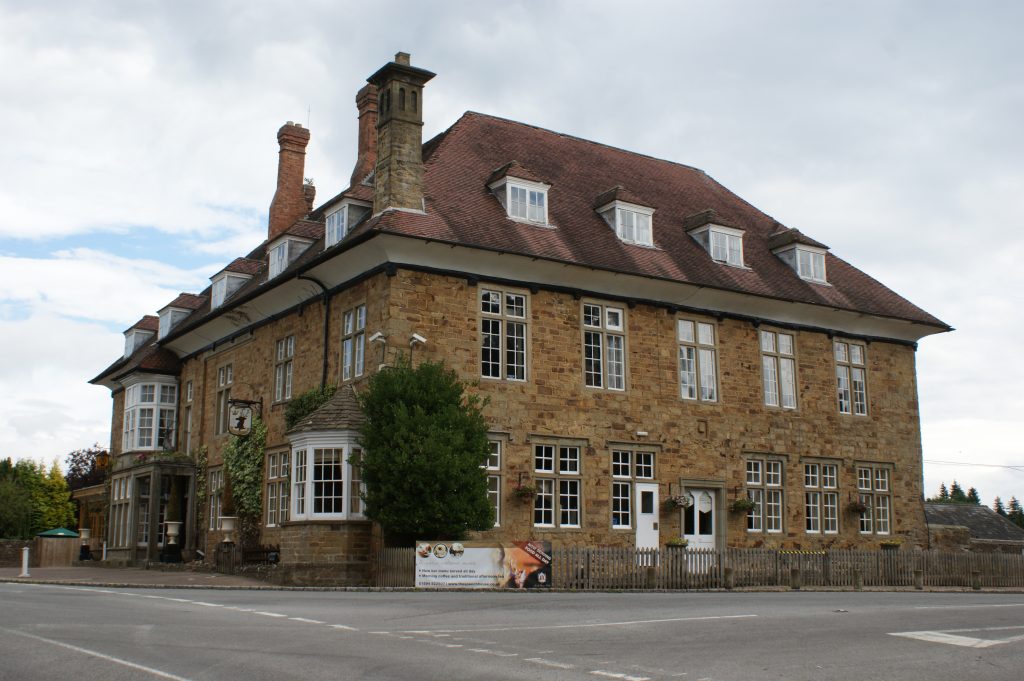
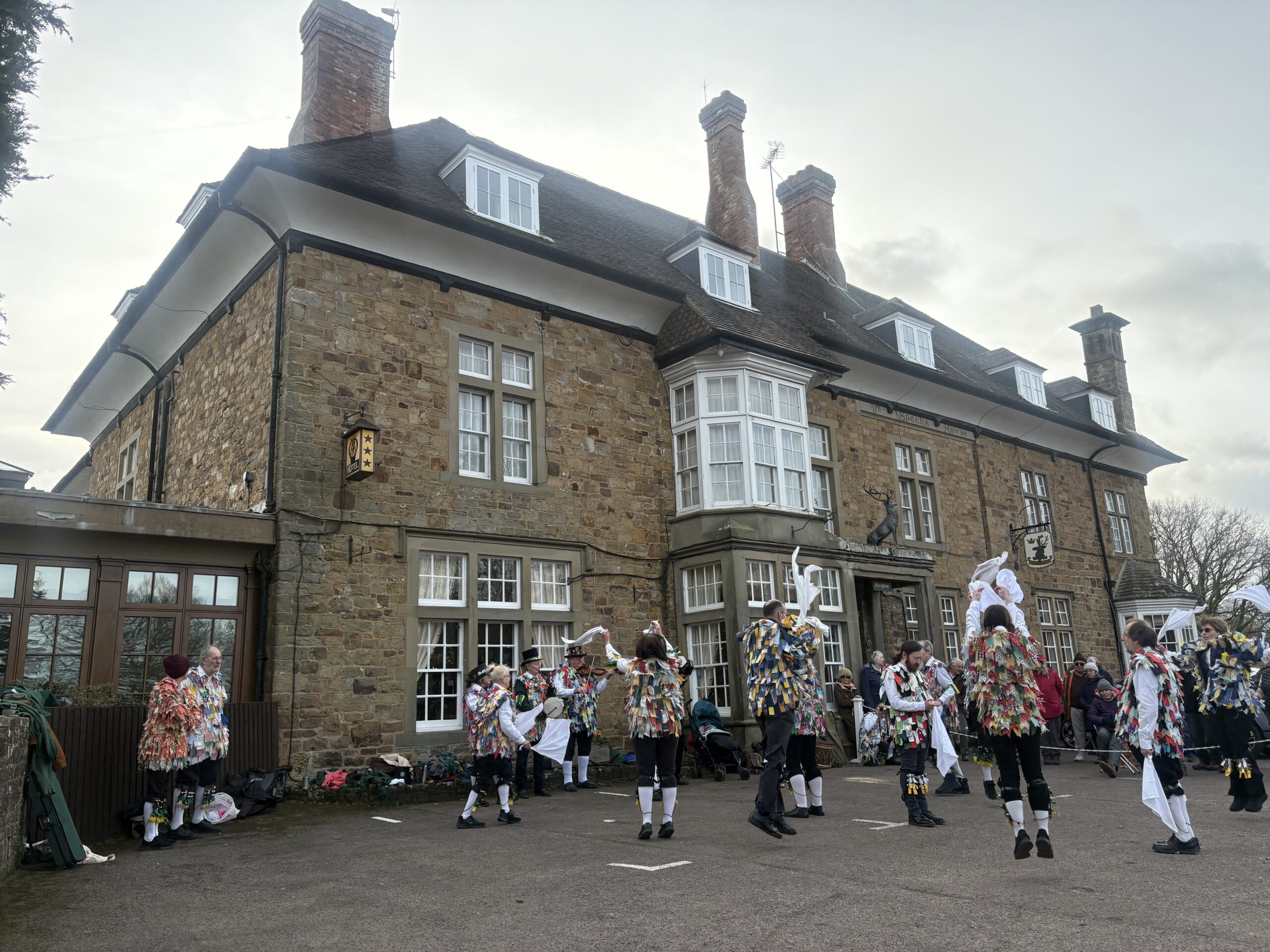
The Speech House is a famous landmark in the very centre of the Forest of Dean. Originally built in 1676 as a hunting lodge for King Charles II. The Speech House was also the meeting place for the Verderers Court. The Verderers were set up by King Canute in the 11th century and were appointed by the Crown as the administrators of the Forest. The Verderers Court still meet at the Speech House once a year. The Speech House became a hotel in 1858.
The grandly named ‘Commissioners of Woods’ were the owners of the Speech House in 1891 and 1903. Perhaps not surprisingly given its prestigious and grandiose setting it had an annual rateable value of £43.0s.0d. and was a fully licensed alehouse. According to the 1891 licensing book the Speech House was leased to Thomas Wintle’s Forest Brewery in Mitcheldean, but twelve years later in 1903 the hotel was trading without any brewery ties. The isolated rural location meant that opening times were restricted with ‘time’ being called at 10 pm.
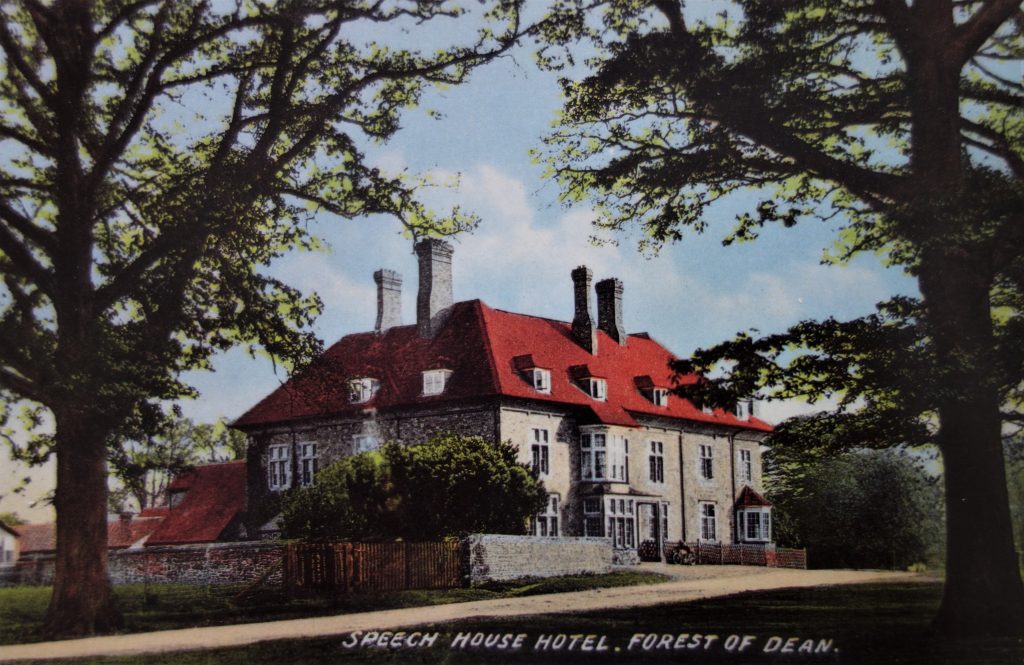
Courtesy of the Speech House HotelTilleys of Ledbury Postcard
In 1901 an article in the Daily Mail read:
‘From the Speech House – that most sylvan of all hostels, where ancient history and modern comforts abide together – the tourist may step bareheaded into hoary holly woods, or the darkly beautiful spruce drive, with its three miles of sentinal trees, or under the shadow of immemorial elm or beech, make excursions further afield to the wonderful scenery of the Yat or the Buckstone. Everywhere he will breathe air like that at Freshwater, estimated by Tennyson to be worth sixpence a pint, for many parts of the forest are seven or eight hundred feet above the sea, and everywhere the botanically-minded may find rare flora, and the entomologist a perfect paradise of insect life’.
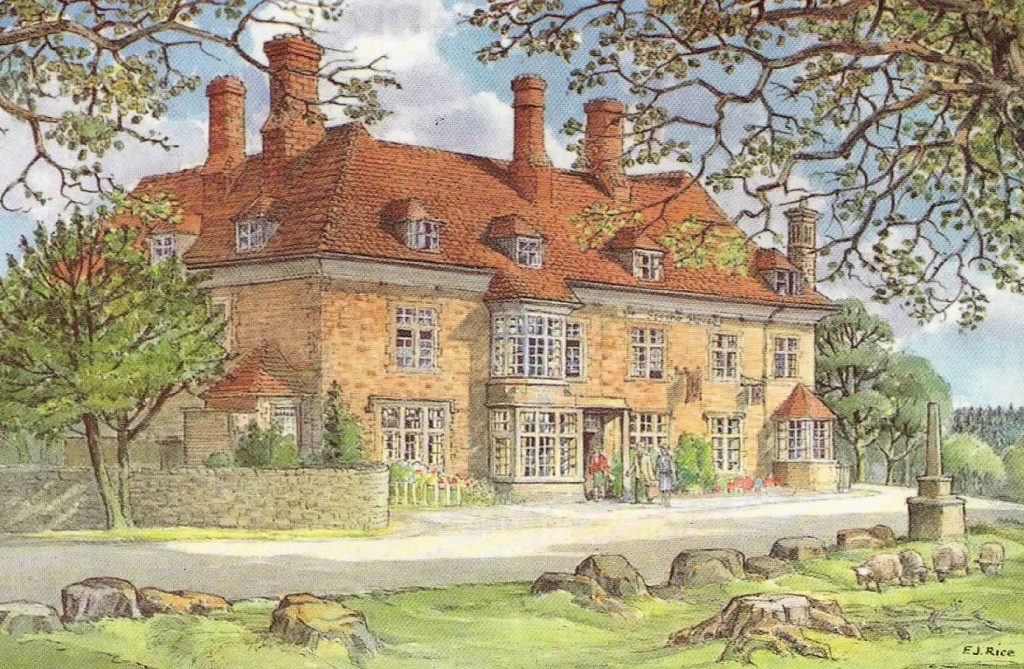
Painting by F.J. Rice
In 1924 a booklet entitled ‘Gloucestershire Inns’ by David McFall was published at the Priestly Studios in Gloucester. Priced just 6d, it was described on the cover as ‘being thumb-nail descriptions of the County’s most picturesque and historic inns – together with announcements of the leading modern hotels, tea-rooms and restaurants, garages, shops and other houses of call dedicated to all inquisitive and observant travellers who favour this neighbourhood with a visit.’ If you think that is a long-winded, convoluting piece of prose, just read this description of the Speech House:
‘In the centre of the Forest of Dean the Speech House, or Speche House, as it was spelled formerly, occupies a most unusual situation for an hotel – miles from any town, in the heart of a deep wood – yet for many generations it has been the resort of artists, literary men and leaders in political life. The name of the hotel came from the fact it was originally the Court of Speech, where the Free Miners of the Forest tried out their litigation and acknowledged no superior authority. The old court room is wholly unchanged in appearance and furnishing, thanks to the thoughtfulness of successive landlords. From the windows of the hotel, in every direction, one may look into alluring vistas in the surrounding hosts of oak, beeches, larches and glistening hollies (a grove of the latter was planted by King Charles II), and trim tennis and cricket grounds add the modern touch to the woodland scenery.’
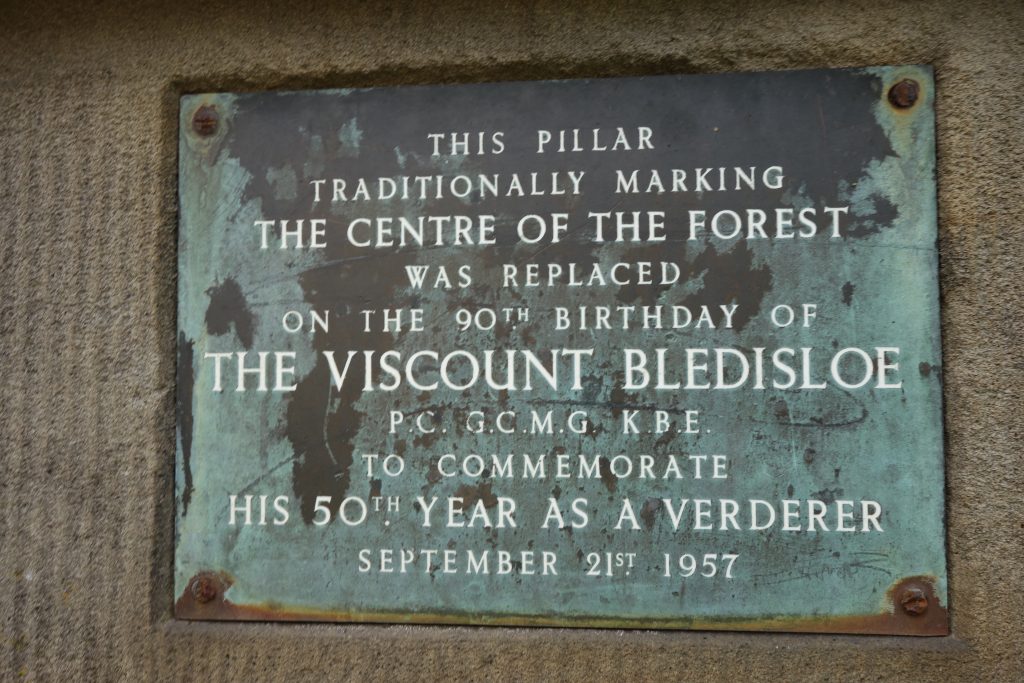
Queen Elizabeth II visited the Forest of Dean on April 21st 1957 on the occasion of her 31st ‘real’ birthday. It was part of a “getting to know her kingdom’ tour of the region. The Queen’s arrival was greeted by a cheering crowd of about 6,000 loyal subjects who had been picnicking in the surrounding woods for most of the day. As is normal the Queen was attended by the Lord Lieutenant of Gloucestershire, the Duke of Beaufort. The Speech House reception committee was headed by Viscount Bledisloe, the former Governor General of New Zealand and Senior Verderer, Verderers Sir Lance Crawley-Bevoy, Major C.P. Ackers and Mr Cyril Hart. The Queen also met the MP Morgan Philips Price and civic dignitaries along with a delegation of local scouts and the Matron of the Dilke Hospital, Miss E.A. Barrett. The Queen and Prince Philip both planted oak saplings using ceremonial silver spades.
In February 1962 cricket legend Wally Hammond and fellow England cricketer David Allen were guests at a dinner at the Speech House. Gloucestershire County Cricket Club organised the dinner and used the publicity in a drive to increase the membership of the club in the Forest. They promised that if the membership drive was successful a County First XI match would be organised at Lydney Cricket Club.
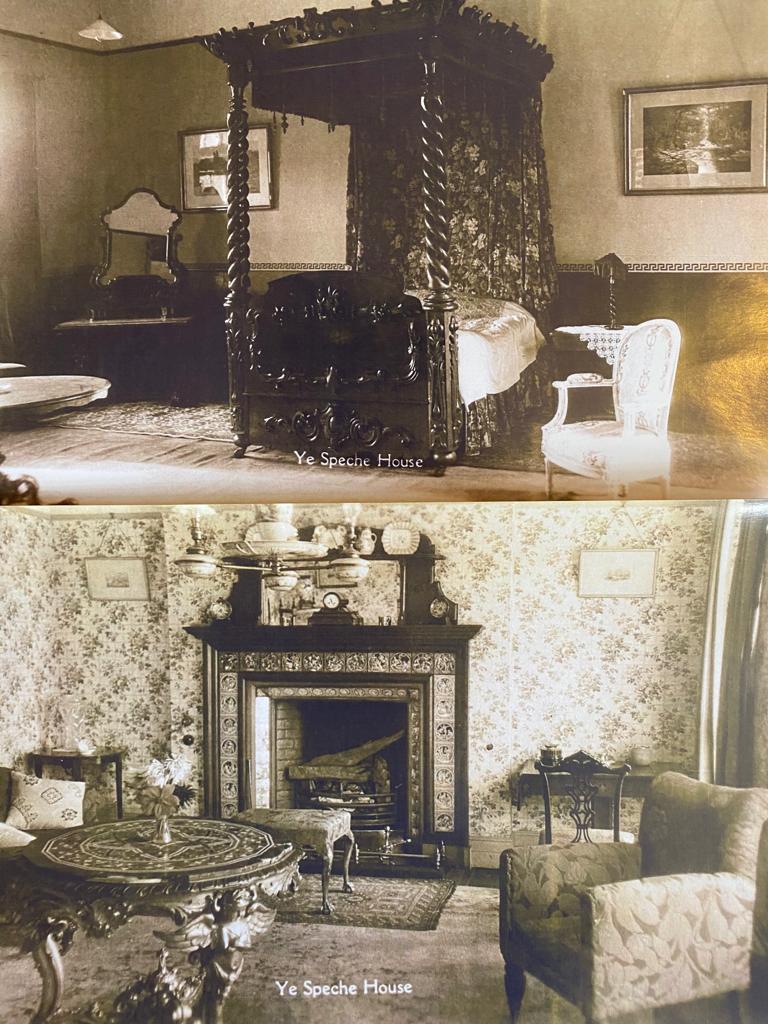
Forest of Dean and Ross-on-Wye Pubs. A critical guide by Jon Hurley (booklet, 1991): This handsome building is an odd mixture. A pub in which real Foresters may disport themselves noisily, whilst in no way irritating Telegraph reading retirees savouring pleasant snacks, allowing very respectable Rotarians to hold forth their various good works in an adjoining and very attractive dining room. So it is all things to all men but a very useful adjunct in an area not over blessed with really first class inns. Although Trust House Forte owned, the Speech House retains much of the old style, small country hotel atmosphere with an attractive egalitarianism, doing all its various and diverse jobs well. The setting too is among the most attractive in the county, standing foursquare on a crossing of several Forest paths, and its four poster beds must prove irresistible to ageing romantics and ambitious young bucks alike. There is a simple but effective wine list and a wide range of beers, lagers and ciders.
Former baker and Forest businessman Harry Kear bought the lease in March 1998 from the Forte Heritage Group. The owners of the Speech House being the Ministry of Agriculture. During his time as leaseholder Harry Kear made considerable improvements to the hotel, increasing the number of bedrooms from 14 to 32 and building a purpose-built health spa.
The ‘Centre of the Forest’ pillar is located in front of the Speech House.
In February 2000 the 110-year lease of the Speech Hotel was offered for sale. An ‘eating out’ review in February 2002 was not entirely glowing with praise noting that, ‘a bit of mashed potato and some mashed swede are hardly three-star fare, more like 1960’s school dinners.’ And in the beamed Verderers’ Court ‘there’s a vast old fireplace, mounted stags’ heads (not a pretty sight) and lighting that’s far too bright. The chandeliers are OK but there are some horrible ceiling-mounted fluorescent lamps, some complete with cobwebs, which should be sent to the skip immediately.’
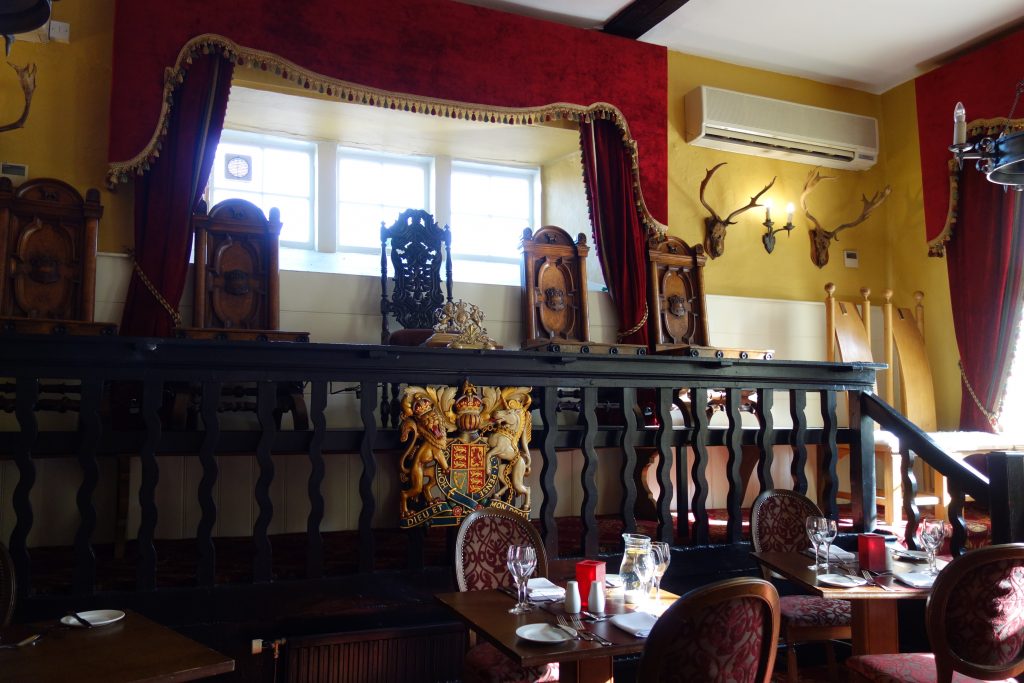
Four unique Verderers’ oak throne chairs were stolen from the Speech House in October 2005. The antique chairs were found when a dealer put them up for auction in June 2011. The unfortunate last owner had to try to retrieve the £16,000 that he paid for them from the previous owners. The chairs were made by the Crawshay family from Oaklands Park in Newnham on Severn and were identified by the family crest and distinctive watermarks which corresponded to photographs taken when the chairs were in place at the Speech House. Head verderer Bob Jenkins said, “We are all really thrilled to bits to get them back. They had passed through several hands and without that photograph it would have been impossible to prove they were ours.”
The Verderer’s chairs at the Speech House Hotel.
Harry Kear sold his interests of the Speech House Hotel to Dorian Charlton and the Drew Group in April 2007. Dorian, who was born into a family of hoteliers, said it was an honour to own the Speech House Hotel. The Drew Group also owned the Cheltenham Regency Hotel. He said, “Everything we do to [at the Speech House] has to be right. So many people butcher things and rip out the original feature. We’re always putting the originals back. It’s nice to see how it used to look and try to create it with a modern twist.” His team were determined to bring the standard of the Speech House to be worthy of its three-stars and strive to exceed their guests’ expectations. Dorian added, “We want to attract a mix of people. We want local people to feel they can use this place and come to have a coffee or a meeting.” The 16-acre field behind the Speech House was also considered not to be utilised to its full potential. “We aren’t event organisers, but we want people to use our field. If anyone has an event that they would like to hold here they should come and chat to us. We want to be part of the community.”
A quarter of a million pounds renovation project was started at the Speech House in November 2008. An orangery was constructed to accommodate about 80 people. Dorian said, “Maintaining the character of the building is top priority for us. Having undertaken a lengthy and detailed consultation process with Forest of Dean District Council to ensure due consideration has been given to conservation needs and the views of the local community, we are delighted to see the work at the Speech House is finally under way.” The orangery was completed in September 2009. Dorian said, “We are delighted with the completed orangery and have received so much positive feedback.” Further plans included expanding the Garden Room and the opening-up of the reception area and corridor to make a large lobby.
A mini-music festival, the Boom Town Fair, was held in the field adjoining the Speech House in August 2009. Although the organisers considered the event to be a success and trouble-free, there were concerns from some members of the public complaining about litter and people urinating in public. The Forestry Commission were apparently only informed about the festival the day before it began. A spokesman said, “There are a lot of issues for us to sort out and we’re not very happy.” Heavy rain before the event also caused the field to be badly churned-up. Dorian Charlton said, “The field will have to be rolled and re-seeded but it will be back to normal soon.” He added, “Unfortunately with events od this scale there will always be some concerns from the public. Someone said they could hear the music in Littledean, but I was staying here in a cottage and couldn’t hear it.”
The Speech Hotel was being marketed again in October 2009. The asking price was £1.9 million pounds. Estate agents Colliers Robert Barry reported that there had been a lot of interest. The Speech House was bought in March 2010 by Peter and Gill Hands. Peter said, “It is very exciting. The hotel has a great location and it is a wonderful building. We think it has big potential.”
A ghost-hunt was organised by a local group of paranormal investigators at the Speech House in February 2011. Leader of the group Phil Jones said that they found the hotel very active with lots going on. He said, “We recorded some Electronic Voice Phenomena and heard the name of ‘Emma’ coming through the equipment.” There were also ‘orbs’ seen on photographic equipment.
An ancient Forest tradition was revived in October 2013 when the Inclosure Commission met at the Speech House for the first time in the 21st century. Known as the Dean Forest Act, it gave the crown authority to enclose up to 10,000 acres at any one time for the purpose of establishing timber trees and the first Inclosure Commissioners were appointed in October 1668. After the inaugural meeting at the old court room at the Speech House the members visited areas in the Forest to be enclosed for tree planting and grazing.
A Trip Advisor ‘Certificate of Excellence’ Hall of Fame was awarded to the Speech House in May 2015, after five consecutive years of receiving consistently top reviews on the world’s largest Internet travel site. Peter Hands said, “This is a great accolade for the whole team, from the people who was up to the housekeeping to the front of house staff. We couldn’t do it without their hard work. We have 55 members of staff here and all but three of them live locally. We get lots of comments from guests about how friendly our staff are. We put a lot of emphasis on training our staff and encouraging them to make the most of their potential.”
A grant from the European Agricultural Fund for Rural Development was secured in September 2017 after talks with the Gloucestershire First Local Enterprise Group. The fund helps small to medium Enterprises’ such as the Speech House to develop and expand their business. After extensive negotiations the European fund came up with a £100,000 contribution. Leaseholder Peter Hands said, “We are extremely excited about creating a fantastic venue for weddings, conferences and events in the very heart of the Royal Forest of Dean”, adding “It is anticipated that this project will bring much needed additional business to the Forest of Dean and the local economy as well as creating more employment opportunities. Local tradesmen and businesses from around the Forest of Dean are to be employed in the construction of the building, The wedding and conference centre is to be named ‘the Edwin Tauber Suite’ in memory of Gill’s father Edwin who was a great lover of trees and forests.”
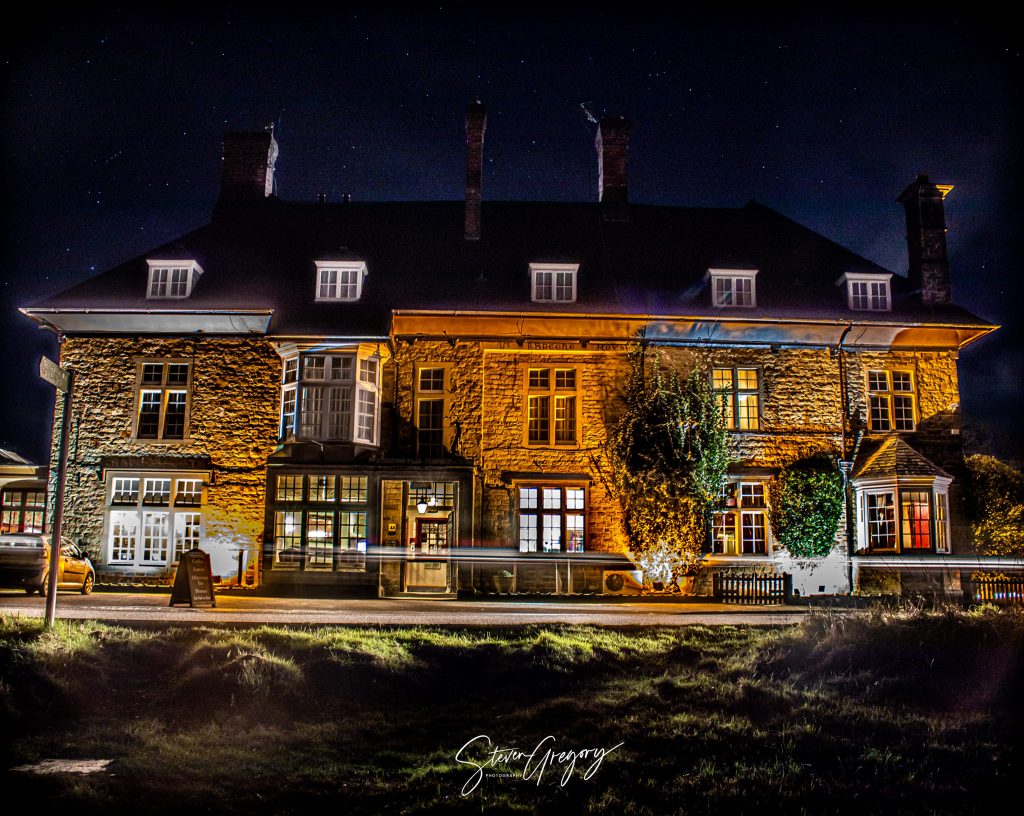
Many thanks to Steven Gregory for this superb night-time photograph of the Speech House Hotel.
The Forest Vintage Vehicle and Machinery Club hold their annual vintage show in the grounds of the Speech House every September. The show started in 2012.
Landlords / Proprietors at the Speech House include:
1852 William Watkins
1856 J. Coleman
1870 John Coleman
1876, 1891 John William Boyce (Speech House commercial and family hotel & posting house)
1902, 1906 George St. John
1919 D. Parton
1927 Walter Wakefield
1984 Megan Richards (manageress – took over from her husband Bob in September 1984. She died in February 1986 aged 54)
1999 Harry Kear
2007 Dorian Charlton (owner) / Nicholas Ireland (General Manager)
2010 Peter and Gillian Hands (Chas Druggan – manager)
Cheltenham Chronicle 11th April 1838 – Case of Stabbing:
Rd Horniblow, 29, was charged with maliciously stabbing and wounding George Tomlins, with intent to do him some grievous bodily harm, near the Speech House, in the Forest of Dean, the 16th of June, 1838. It appeared that the prosecutor and prisoner, with about 30 or 40 other persons, were employed at bark-stripping, and that about one o’clock in the day they sat down to dinner, the prosecutor and prisoner were sitting next to each other. Prosecutor struck off the prisoner’s hat, and the prisoner did the same to the prosecutor, who took the prisoner’s dinner and said he would not give it to him unless he fetched the hat he had knocked off. Prosecutor again struck off the hat of the prisoner, who thereupon made a blow at the prosecutor with a knife he had in his hand, with which he had been eating his dinner, and wounded him severely in the breast. He repeated the blow, but prosecutor warded it off. Prosecutor was confined to the house for eight or nine days from the effects of the wound. For the defence the prisoner received a very good character, and it was also stated that he was considered by his fellow workmen and others as rather weak and a fit subject for ridicule and jokes, which on the morning of the occurrence, and at other times, had been rather freely practised upon him. It was likewise urged by Mr. Greaves in his behalf that it was probable that when he struck the blow, in a moment of irritation, he forgot for the instant the knife he had in his hand,and that he had no intention to maim dangerously or wound the prosecutor. The jury returned a verdict of guilty of common assault, and the prisoner was sentenced to six months’ imprisonment and hard labour.
Cheltenham Chronicle, 5th December 1844 – Burglary: John Allford, 26, William Perkins, 28 were indicted for burglariously breaking and entering the dwelling house of John Watkins, at Welsh (sic) Dean, on the night of the 23rd of September, and stealing a shirt and other articles his property.
Mr. Cooke prosecuted, and Mr. Huddlestone defended the prisoners. The prosecutor resided at the ‘ “Speech House,” in the Forest of Dean, where the Foresters, before the alteration in the law, used to assemble to elect their burgesses, but at the time the robbery was being altered for the purpose of converting it into an inn, and part of it was pulled down. The door leading to the great hall was nailed up at ten o’clock on the night in question, when the prosecutor and his wife retired to bed. On coming downstairs at five o’clock the next morning, Mr. Watkins found that the hall door had been forced open, an entry made into the house, and from a room on the right side of the large hall several articles had been stolen. About one o’clock in the morning, the two prisoners were seen coming Irom the Speech House, carrying a bundle: when they discovered the police, Perkins threw a large stone, upon which the constables seized them. One of them dropped a bundle, which was found to contain two ducks and some linen. Perkins said, “don’t touch me, and I’ll go along quietly.” Allford said, “Go at it; we won’t be taken tonight;” to which Perkins replied, “Here goes, then;” upon which both prisoners began throwing stones at the police, and a desperate struggle took place, but they were ultimately secured. It appeared that both prisoners were severely wounded by the staffs of the policemen, Perkins’s arm being broke, and Allford’s head cut open. A shirt was found near the spot where the conflict occurred, which was identified by Mrs. Watkins as one she was making for her husband.
After a powerful defence from Mr. Huddlestone, the Judge summed up, and the jury found both prisoners guilty, and they were sentenced to transported for 10 years.
Gloucester Journal, 7th December 1861:
THE FATAL AFFRAY IN THE DEAN FOREST. George Cooper, aged 23, collier, Thomas Cooper, aged 29, collier, Richard Roberts, aged 34, collier, and Thomas Gwilliam, aged 31, quarryman, were charged with the wilful murder of Police Sergeant Samuel Beard, in the Forest of Dean.
Mr. Cripps and. Mr. Powell prosecuted; Mr. Cooke appeared for George Cooper, Thomas Cooper, and Thos. Gwilliam; and Mr. Griffiths, with Mr. Evans, apperaed for Roberts.
Mr. Cripps briefly opened the case for the prosecution. He said the jury had heard the charge against the prisoners, and he need say no more than that it was a charge of wilful murder, to induce them give the case every attention. He scarcely need say that he hoped they would not allow themselves to be in any way influenced by anything they might have heard to the prisoners ‘disadvantage. The case had been brought prominently before the public and had excited a great amount of public attention. The deceased had gone out in the Forest, he there met with several men, and, unfortunately, he was murdered, or nearly so, for he died shortly after being found. The facts of the case appeared to be briefly these:—Mr. Guest, a farmer, residing at Maidenham Farm, having reason to believe that some of his sheep would stolen on the night of the 17th August, obtained the services of the deceased, who, many of those who were in the habit of attending these assizes were aware, was an active and intelligent police officer, stationed in a district in which his duties were of an unusually arduous, and, as it proved in this instance, a very perilous character. The two went to the Speech House, an inn, he believed, of considerable antiquity, situated in a lonely district. It would be proved that the deceased saw the four prisoners at the Speech House, and though Mr. Guest could not identify the four men who came to and went from the Speech House, yet he saw one of the men go back to the house, and heard him inquire about a dog. This man could be identified. He went back after the others, and they were followed by the deceased officer and Mr. Guest. The latter passed the men and went on, while the police officer stayed behind. Shortly afterwards Mr. Guest heard the sound of blows, and saw the men come out of the trees which skirted the road. He then went to find his companion Beard. This, however, he was unable to do until the morning, when he found him fearfully beaten, so much so that a few days afterwards he died. The learned counsel, after referring to the dying declaration of the deceased, in which he identified several of the prisoners, concluded by requesting on the part of the jury a fair and impartial hearing of the case.
William Gunter: I am a blacksmith. On the 17th of August I was at the Speech House. I went about six or seven o’clock, and left about nine. I know the four prisoners, and saw them there.
Mr. Cooke: Beard wanted to know whether it was not the two Coopers and Roberts who were in the house. I saw Beard in the house, and he had a glass of beer.
Thomas Jarrett: I live at Cinderford, and am an iron refiner. On the evening of the 17th August I was at the House and saw Thomas Gwilliam there. I had my tools with me, and amongst them a rasp; I turned round to Gwilliam and said, “Here is an old file, and may do to make you a rasp.” It was from 15 to 16 inches long and an inch and a half to three quarters of an inch thick. I went away from the Speech House, and left the men there. I never heard anything against either the two Coopers or Gwilliam.
By Mr. Griffiths: Roberts has always borne a good character as a steady, honest man. He is married and has children.
Elizabeth Rooke: I was acting charwoman at the Speech House on the 17th of August. I recollect the prisoners coming in together. They left about half-past eight. They went together, and one came back and said there was a dog left behind. I saw two dogs with them when they went out. I said there was no dog left behind. I slept in the house, and about half-past four in the morning I was called up, and I and Mr. Coleman went out. We went towards a place called Hensley, out in the open Forest. There was a gate there belonging to a field.
By Mr. Cooke: We found the poor man Beard lying in the road-way in the direction of the open Forest.
By the Judge: The roadway is where the waggons go.
William Guest deposed: I am a farmer, residing at Mardenham Farm. On the 17th of August I had some sheep on the common, near the Speech House. On that evening I had an appointment with Sergeant Beard at the Speech House, and met him there at about eight o’clock. We remained there some time. About half past ten I saw four men go out. There are a great many trees about there. There was a little moonlight. The trees would interfere with the light of the moon in that place. When the men came out, I did not know them, and never had, to recognise them as the men here. The men I saw had two dogs, and one went back and asked if there was a dog in the house. I did not see who he spoke to. The men went down the road towards the Moseley Green. When the fourth man came back from the Speech House he followed the others, in the direction of Moseley Green. I and Beard followed them. We were out of the road, on the side of the Speech House. On that side were trees, which were between us and the men. The shade of the trees hid us from the men. On the left hand side of the road from the Speech House there are some rails and some fields. Before I parted from Beard I saw one of the men stop at the rails. He was about fifty yards beyond the gate. I and Beard then parted. I went in front, leaving Beard behind. That is, I went further on towards Moseley Green. I passed the man I saw stop at the Speech House. He was at the end of the rails, in the road. He was standing still. wished him “good night” He wished me “good night” I went on to a second gate of the Speech House field. I there saw three men. I know the spot where Beard was found. The gate where the men were led into a field, and another gate led into the Forest. Beard was found by the last gate, on the Forest side, about ten yards from the gate. When I passed the men I went on down the hill. I turned round into the Forest, to where I left Beard. I left Beard amongst the trees. I passed about two hundred yards and got to the same line of trees where I left Beard. I had got half way to the Speech House before I heard something. Almost ten minutes had passed when I returned. I heard some blows. I heard a man halloa “Tom.” There was also one who hallooed “Dick.” Nearly at the same time I heard the sound of blows. They were heavy blows some kind. They came from near the gate where I found Beard. When I heard the halloaing and blows I stood under the trees and listened and then went where I had parted from Beard. While I was there amongst those trees I saw four men. They were coming from where I found Beard. They were coming from the Forest side. When I first saw the men near the gate where the three men were.
By the Judge: They were in that part of the Forest where Beard was found.
Re-examined: They were between the first and second gate. They made some stand. I left the gate and went on up the road. I saw them going up the road in the direction of the Speech House; that was the last I saw of them. I was about fifty yards from the men when they went up the road. After I saw the last of the men, I went up the road to see if could find Beard, I walked about looking for him until it was late in the morning. I found Beard. He was lying down his side and was bleeding. He appeared to be dead, or nearly so. When I went to him there was blood on his face, and his lip was cut. In a little time after he spoke to me. About the spot where he was lying there was a small stick. It was about a yard or two from him. There was blood on the stick, and it was broken. There were some nets on the ground, and I saw some blood on the ground. The nets I call “gate nets”—about the width of a gate -for catching hares. The blood was in several places. Beard’s |policeman’s staff was in his pocket. I remained some little time with Beard, and then went back to the Speech House to get assistance. The gate near where I found Beard was a gate in the hedge. [A plan the spot where Beard was found was here handed to the witness, who pointed out the position of the gate referred to.]
By Mr. Cooke: The piece of stick I found covered with blood did not appear to be a piece of one of the felled trees. It was a green stick, [The piece of stick was here produced.] When I engaged Beard to watch with me I did not mention the names of either of the four men here. When they went out of the Speech House said those were not the men. Beard knew the men. Beard was in his coloured clothes, and not in his policeman’s uniform. Beard did. not say that we must go into them. He said, “If they were at the sheep we must go into them; very likely we should get a good hiding, but we must die a good colour” (sensation). I said very likely the men were poaching. When I was waiting about I did not think Beard was being beaten. I had no thought he was hurt. Near Beard I found two nets “tealed” (set) on the hedge, and the other was tied up in a smockfrock on the ground. The men appeared have gone on without their nets. When I found Beard he was chilly. I roused him up, and he spoke to me. He did not say anything about a stick. His staff was in his side pocket. He had a walking stick, which was lying near him. I had one, too, which Beard borrowed for me.
By Mr. Griffiths: I do not know whether Beard was my friend or not. I have drank with him. After I passed the men I did not hear any cries but “Tom” and Dick.” There were some croppings of trees about.
Re-examined: When I saw the nets they were set. They were for catching hares.
Mr. Coleman: I keep the Speech House Inn and know the property around it. I recollect Beard and Guest coming on the 17th August, and having some beer. There were several persons in the house at the time. Thomas Cooper was there. I knew him but did not know the rest. All that were in the house left together. There were probably eight or ten persons there. It was a moonlight night. I recollect some person returning and asking about a dog. I heard no more of the matter until the next morning, when I was aroused by Mrs. Rooke. The place to which I went was near the third gate. I saw Guest and Beard; Beard appeared to in a dying state; he was lying about ten yards from the gate. I and Guest tried to carry him, but he sank down on the ground out of our arms. His face was covered with blood, and a little stream of blood was running out his mouth and ears. I tried to administer some brandy, but his mouth was so knocked about that I could not get the glass to his lips. There were pieces of cordwood lying about.
By Mr. Griffiths: I know Thomas Cooper by sight. The inquest was first commenced at my house. Mr. Trafford, of Blakeney, was the foreman. I heard that Richard Roberts was examined before the coroner.
Dr. Hatton: On Sunday, 18th August, I was called in to see Sergeant Beard, at the Speech House. was beaten severely about the face and mouth. His lip was cut through. His face was much blackened about the eyes. There were sundry bruises about him. One on the left arm. There were some on the shin, but those were not so severe. I imagined at the time that the injuries about the face were caused by a stone or a kick from a heavy boot. I was shown a piece of cordwood which might have produced the injuries, except those of the mouth. A piece of iron, fifteen or sixteen inches long, might have inflicted the latter injuries. I made a post mortem examination of the body. (The witness here described the results of his examination, which have previously been reported.] The skull was fractured, and the brain had suffered material injury. The brain one side was softened- the result of inflammation. From my observations I should say the deceased sustained several blows. When Beard made his statement, I do not think he thought he was in dying state. I considered that he had sustained mortal iniuries. I saw the man on Sunday, 18th August, about eight o’clock. He did not express any opinion as to what had taken place. When roused he returned to the question. When asked if did not think himself in great danger, he said he thought he was, but hoped that he should recover, and that he felt better than was in the morning. I gave evidence before the magistrates and signed it.
The Judge : Take the depositions and read that part of the evidence relative to the man’s state at the time he made his declaration. [The witness read.]
His Lordship Is that correct?
Witness: It is.
His Lordship: Then that part of your evidence in which the deceased said he should die you have now omitted?
Witness: I have omitted that. It is correct.
By Mr. Cooke; The man was very deaf when I saw him and had great difficulty in hearing my questions, so that 1 had to raise my voice louder than I am now speaking.
After some legal discussion between the judge and the learned counsel for the defence, as to the admissibility of this portion of the doctor’s evidence.
Mr. Coleman was recalled and said, when he went to Beard, the latter said, “Let me lie down and die.” The first doctor who saw him was Mr. Hatton. That was about eight o’clock; Mr. Brickdale came in the afternoon. The deceased had then been some hours in bed, and a little brandy and water had been given to him. He saw the deceased again before he died.
Mr. Griffiths: The deceased did not say anything about making a will, nor that he hoped someone would be hung.
Dr. Hatton re-examined: I know what doctors’ term “counterstroke.” That is, when a blow is struck on one side of the skull and a fracture is caused on the other. The deceased was like all persons with fractured skulls, in a sleepy, drowsy condition. The temporal muscle was reduced to a jelly.
By Mr. Griffiths: Mr. Whatmough was at the house before me. The words “I shall die, I shall die,” might have been caused by agony, and not really intended to be said. There was a great deal blood on the brain, and that would cause the deceased to have but a very confused idea of what was going on. The declaration was got from the deceased by questions. The deceased sometimes said “Yes” and “No.” “I know who did it,” and deceased sometimes said “I know who they be.” Some of the questions were in the form of suggestions made to him.
By the Judge: His depositions were read over to him, and he apparently understood them. He was confused, and I should not like to say he did understand them.
Supt Taylor deposed: I saw the deceased after the affray; he said, “This is a bad job, Sir” and then sank back and closed his eyes. I was present when he signed the depositions. He said he was too ill to write. The prisoners were brought into the room where deceased was lying, and he looked at them. The prisoners were taken after the depositions were made. I told the deceased I should bring the prisoners before him. He said, “Don’t do so, it is more than I can bear.” I said it is necessary in case of death taking place. The persons in custody were taken into the room. He looked at them twice, and after they were gone, he made a statement. After he had put his mark to the depositions, I asked him how he felt. He said he was very ill. but hoped he should live. I examined the spot where the deceased was found. I found three human teeth and the stick produced. I apprehended the prisoners and charged them with assaulting Sergeant Samuel Beard. They said “they knew nothing about it” I found two spots of blood on the right leg of the trousers of Gwilliam.
The statement made by the deceased before Mr. Brickdale and another to Superintendent Taylor were then put in, but were objected to by the counsel for the defence.
Mr. Griffiths said he should humbly submit to his lordship that the deceased was in such state as render this statement inadmissible, citing “Russell on Crimes’’ for precedent as to the admission of dying declarations, and reading the opinion of Mr. Justice Patterson and Mr. Greaves, “that unless a man was dying, and past all hope of recovery, his declaration could not be admissable.” He (the learned counsel) submitted that the expression of the deceased, “I hope I shall live,” evinced a belief that he should recover, and that he had no fear of impending death.
A lengthy discussion passed between his Lordship and Mr. Evans, and the other counsel for the defence upon the subject. Mr. Evans submitted (on an authority which he quoted) that if any feeling of revenge—which was natural under the circumstances— mingled with the deceased’s statement, that statement became vitiated and inadmissible.
His Lordship said he was of opinion that the statement made on the 18th instant, before the magistrate, was admissible, but if the counsel for the prisoners should object to the statement made on the Monday before the Superintendent, he should let that portion of the evidence drop, as being inadmissible. The question entirely rested on the evidence of Mr. Coleman, who first went to the man’s assistance and that of the surgeon. There was no doubt that when he was found by Coleman he had received a mortal wound, and. that the remark made by the deceased, “Let me alone ; let me lie down and die,” showed that he was in fear of impending death.
Mr. Griffiths asked his lordship to reserve the point.
The learned Judge said he must decline to so, for he had no doubt upon it, and it was a question solely for the judge at the trial.
[The deposition of the injured man before J. F. F. Brickdale, Esq was then put in and read.] The following is a copy: –
Last night, the I7th of August inst. at about eleven o’clock, I left the Speech House Inn, in the township of West Dean, in company with William Guest, to watch his sheep, which he informed he suspected would be stolen. On passing the further field belonging to the inn, towards Little Kensley, an open part of Dean Forest, I saw round the gate four men, who I thought were setting nets for game, and I went towards three of them who were together, and the fourth I passed by. The three men were Thomas Cooper, otherwise Crow, of Berry Hill, and his brother, George Cooper, and Richard Roberts, of Shortstanding. The fourth man was named Gwilliam and lives in the same neighbourhood of Berry Hill.
The three men first named attacked me; Richard Roberts hit me down with a stick, and they all fell on me when I was down and kicked me on the head. I called for Guest at the first to come to me, but I was down before he came. I know not what happened until I was carried into the Speech House Inn, in the morning. I feel better than I was in the morning.”
Mr. Cooke and Mr. Griffiths said then they had no objection the deposition before Mr. Taylor being read. It was read as follows; —
“Speech House, 19lh August 1861
Thomas Cooper, George Cooper, Richard Roberts and Thomas Gwilliam, who I have just seen, are the four men who assaulted and best me last Saturday night. I watched them leave the Speech-house about eleven o’clock that night. They went along the road towards the Facey Pit. I afterwards saw three of them near a gate leading into a small field near the Speech-house. I went to them. I met George Cooper a short distance from the gate. I asked him what they were doing there; he said it was no odds to me. I told him I should search him. He then struck me with a stick. I struck him on the head with my staff. One of them called for the fourth man, who came. They all fell onto me. Roberts struck me a heavy blow on the head with a stick; I then fell down. They then kicked me abort the head and face when I was down. I became insensible, and knew nothing after, till I was at the Speech-house on Sunday. —The mark of Samuel Beard, X ; William Taylor, Supt. witness.
Beard was a powerful man. The prisoners were taken to the Littledean Lock-up. I believe it was by the direction of the remanding magistrates that I refused the prisoners’ counsel admission. When the prisoners were examined they were not handcuffed.
By Mr. Griffiths: The prisoners were kept in separate cells.
P.C. William Webber deposed: I was in attendance upon Police-Sergeant Beard from Sunday morning until his death. On Monday, the 19th, about eleven o’clock, he complained of a pain in his head, and said he should die. He said, “I can’t stand this ; I shall die.” He said he knocked one of the men down with his staff.
Thomas Cooper shoemaker, deposed: The prisoner George Cooper lodged at my house on the 17th August, He went to bed about eleven or half-past eleven o’clock. They slept in the same bed and I did not see anything of him until I awoke in the morning. I then saw George and Thomas Cooper together. They told me they had had a bother with a man at the Speech House. They said they thought he must be a policeman. They said they had beaten him very badly. Thomas Cooper said hoped the man was not dead, he would not kill a man for the world. Gwilliam said he had struck the man with a rasp.
By Mr. Cooke: George Cooper had a tremendous cut across the head, and there was blood on the pillow where he slept. He said the policeman struck him across the head. The prisoners said they thought the man was knocked down senseless, but they came away when he was down. George Cooper said he was knocked down senseless. I did not attend at the coroner’s inquest. I did not know I was wanted to do so.
PC Rodway said he had seen Beard and George Cooper talking together. He had charge of the Littledean Gaol, and on the 27th August George Cooper sent for him and said he wished to make a statement. Witness duly cautioned him and then took down his statement. It was put in and read as follows:
“On Saturday night. the 17th of August, I went to the Speech House Inn, and had seven or so pints of beer. We had nets and dogs with us. I am not certain what time we left the Speech House, and as soon as we had the nets teeled we put the dogs over, and they tongued a hare. Another man ran down the road before him; then this Beard came down; he stood opposite the turnpike road; Richard Roberts was at the upper gate, and I at the lower, and he passed Richard Roberts, and I round the corner of the lodge. He had catched hold of Thomas Gwilliam, and I went and told him to loose; he did not say anything for a bit; he put his hand io his coat pocket, took hold of his stick and struck me on the arm; then I cut him wo or three times with the stick. Then after he hit me on the head and knocked me down; he stunned me for a minute or two. When I got up he was down. Thomas Gwilliam and my brother was together; Richard Roberts was behind. He came up then. Richard Roberts never touched him, nor I don’t think that Thomas Gwilliam did. I was behind the hedge. It was by where he was found. It was dark between the trees and the hedge. Signed, George Cooper.”
Cross-examination resumed: On the 27th of August Gwilliam asked him when poor Beard was to be buried. Witness said “To-morrow.” He said he was very sorry, and then made the following statement:
On Saturday, the 17th of August Thomas Cooper, George Cooper, Richard Roberts, and myself went to the Speech House. Mr. Coleman told us had put poison down to kill the rats. We told him it would not do to put the ferrets down, as they would eat the poison, and kill them. We stopped there and had three or four jugs of beer. Then we went down the road to his meadow to try to catch a hare. We put down the nets, and put the dogs on, and as soon the dogs were over, they started one. This man, Mr. Beard, came up to Thomas Cooper, and then I heard them making a noise. I then went towards them. Mr. Beard stepped towards me and caught hold of my arm. I asked him what he wanted of me, and he made me no reply. Then Thomas Cooper came towards him and begged him to loose me three or four times. Then his brother, George Cooper, came, and he begged of him to loose, and he did not. George said, “ If you do not, I shall make you.’ Then George struck him. Then he pulled his thing out his pocket and knocked George down. Thomas Cooper was stood by; and there was some stripped sticks by, and Thomas Cooper laid hold of one that was there and struck Beard, and then Beard struck him on the side of the head. Then Thomas Cooper made another blow at him, and knocked him on the head, and Beard fell down. He went to strike at him again, and I said “Oh dear, don’t” and he stopped his blow. Then he looked at him and said he was afraid he had killed him. Then Richard Roberts came up and said, “Oh Lord, I hope you have not killed him.’ Mr. Beard aid turned over himself, and then we run and left him. Cooper said he hoped he had not killed him. He would not have done it for all the world.”
That closed the case for the prosecution.
Mr. Cooke, in addressing the jury for the defence, requested on behalf the prisoners the impartial consideration of the jury. The case had caused great excitement in this large and populous county, and it had been their object to get twelve gentlemen upon the jury who were entirely unprejudiced by anything they might have heard against the prisoners. The case appeared to have been one of those unfortunate accidents whose termination was as unlooked for by the offenders themselves as by the injured man; and, under the direction of his lordship, it would be for them to decide whether the injuries sustained by the deceased were were not inflicted by malice aforethought. He had not understood from the evidence of Mr. Guest, that the men with their dogs when he saw them were in the field but in the road. There was general misunderstanding on the nature of the game laws. The law he must tell them, did not vest game in anyone. He dare say they had heard of the case of the late Earl Fitzhardinge, in which some men were charged with poaching, but it came out at the trial that the game which had been driven off the defendants’ ground day returned night to roost, when the defendants went after them. When these unfortunate men at the bar went out on the night in question they had no thought of being molested or molesting anyone. They merely went to catch a few hares. They all knew how to catch hares. It was done with nets, and the assistance of dogs. Now to send dog into a field was not legally punishable, unless the men trespassed themselves. He was delighted when he found that that he could put a question to Mr. Guest, with a certainty that his answer would be that he never had any suspicion that these were the men who stole his sheep. The fact was, that the Police-constable really had no business to interfere with them at all. But he was anxious to show his zeal and activity. It might sometimes be said of policemen, in the words of Dr. Priddocks, “they are officious as well as official.” This policeman, determined to take into custody single- handed the four men. and talked loudly about “going into them,” and “dying a good colour,” etc. It turned out that he had no right at all to interfere with them. He did not think it was ever intended in the game laws that policemen should be assistant gamekeepers to country gentlemen. It was monstrous that they should do so, for they (the game laws) did not contribute to the pay or clothing of the police. He contended that these men were not committing an indictable offence. No wonder that Mr. Guest should go away when he found he was in company of a hot headed policeman, who was determined to die blood, or die red in arresting men whom he knew were not sheep-stealers. The policeman went to the men and said them, “What are you doing here?” or something of the kind; and upon their replying, “It’s no odds to you,” immediately knocked one them down with his truncheon, and they struck him in return. It was no use to tell them (the jury) that the stick upon the table (a heavy bludgeon) was the weapon used. That had no more do with the affray than any stick in the Forest. But there was just as much excitement aroused in this affair as if the Queen had been shot at, as far the police were concerned. Supt Taylor himself had told them that it was the most serious case he had ever had to do with. It had been shown by the evidence that the policeman first struck the men. What business would he ask had this man, or any man to assault a free British subject? Beard’s violence led to violence on the part of the prisoners, which had been the means bringing them into that unfortunate position. If the jury found that the prisoners did not use a greater amount of violence than was necessary to protect themselves, then they would bring in a verdict of manslaughter. The crime manslaughter was the most elastic offence known in the English law. It trembled on the confines of accidental death and went to the very verge of far more serious crime. The fact that the prisoners left their nets in a smock frock behind them, upon knocking down the policeman, was pretty strong proof of the fright they were in, and showed that the offence was not premeditated. With regard to the fact that the policeman’s staff was found in his pocket, his own evidence, which he (the learned counsel), very willingly allowed to be put in, showed that he used his truncheon, and it was but reasonable to suppose that upon being knocked down, and he when still had sufficient strength and vigour left in him, he had replaced it in his pocket himself. The conduct of the prisoners after the offence did not justify the supposition that they had deliberately murdered the policeman. When George Cooper heard that his companions were arrested, he gave himself up and volunteered a full statement of the real facts of the case. After condemning the severity with which the prisoners were treated, when before the magistrates, at the Littledean prison, and in not being allowed to see their attorney, the learned counsel called upon the jury to consider that the prisoners were not men who had been notorious poachers, but who were steady, hard working men, who, up to this time, had borne an irreproachable character, and who while amusing themselves by catching a hare, on a moonlight night, were rudely accosted by the policeman Beard, who had died from injuries which they inflicted in self-protection. After all it came to this, that these men had been to a public house, and that they went down the road and turned their dogs into a field, and the unfortunate man being there, he, in excess zeal, seized George Cooper and said “I must search you!” in a manner too characteristic of the police who, he was sorry to say, often inflamed and outraged the feelings of the humbler class of people by their rude and violent behaviour,—and often brought them into a disgraceful position consequence. George Cooper refused to submit this indignity and was immediately knocked down by the policeman’s truncheon, which, they (the jury) well knew, was a most ugly weapon to use at any time. His brother came up, and the result was the injuries inflicted upon the policeman which ultimately caused his death. The learned Counsel concluded by urging the jury to return the milder verdict of manslaughter, which, he believed, would be consistent with the facts of the case, and the satisfaction of the law.
Mr. Griffiths then addressed the jury for the prisoner Roberts. After remarking the serious nature of the crime of murder, with which the prisoners was [sic] charged, he asked them to dismiss from their minds anything they may have previously heard respecting the case and not allow any indignation they might feel at the death of Beard to influence their better judgment. Before they could find Roberts guilty, they must be satisfied beyond all reasonable doubt either that he struck the fatal blow, or that he directly or indirectly assisted in depriving Beard of his life. He (the learned counsel) fervently asked them to well weigh and sift the evidence; and then he thought they would agree with him that Roberts had been guilty of no offence. Here was a man with a wife and two small children. If they found him guilty, they would deprive those who looked to him for support of help. Would they deprive those innocent babes of the only friend they have in this world, and that friend their father? If they found him guilty of murder he would most assuredly be handed over to the cruel executioner, dragged as a felon to the scaffold, to be plunged into eternity, his children brought to the workhouse, and his wife probably to a premature grave, and the once happy home be for ever made desolate. He begged of them to pause before they returned such verdict as this. By taking the solemn oath they had they swore to give a true verdict beyond doubt; let them weigh each sentence and word of the evidence that ere they retired to their beds they might kneel fearlessly before the King of Kings to say they had done their duty. The learned counsel then directed the attention of the jury to the evidence. With respect to the dying declaration of Beard, he contended that the poor man’s mind was in such a state of confusion that he was entirely mistaken, —he must be mistaken in saying that Roberts was the man that struck him. Mr. Cripps, for the prosecution, had himself admitted that the brain may have been injured to cause the mind to be confused. The doctor who had been called had told them that it was with great difficulty they extracted anything from him; at times he was perfectly incoherent, at other times almost deaf. There was doubt the policeman in attendance on him had asked him whether he believed Roberts was the man that had struck him, and that he said “ Yes,” If there was , doubt there was one who could place beyond all dispute. He would not call him a man, because a man he was not. Mr. Guest, who asked Beard, his friend who had drank with him, to watch that night for the thieves who had stolen his sheep; and when he was in distress where was Guest? Gone. As a coward, fled. He could have been there. He could have told them whether Roberts was there or not. He could have told them Roberts did not strike the blow. Guest was close by the gate where Beard met his death. It was a still night; he says there was a wind blowing; but not hard but he could have heard the cries for “Tom,” and “Dick” and did they doubt that Guest heard the Cries of his friend “Come on Bill?” Did they not rather believe that Guest, as soon he had heard Beard tell him that they should all likely get a hiding, became frightened, and went and hid himself behind a hedge, otherwise in all probability he would have saved Beard’s life. The one man Guest passed at the second gate was doubtless Roberts, whose name was Richard. If Roberts had been one of the three men who were at the other gate where was the necessity for one of them to call out “Come on Dick” The night was dark, and when Beard was struck over the head he became confused and must have been mistaken about Roberts being one of the men who struck him. The prisoners on being taken up were not allowed to speak to each other, and they wished “to make a clean breast of it” and to save an innocent man. “Roberts,” said George Cooper, “never touched the man.” He said “Beard had got hold of Gwilliam, and I begged him to leave him, he would not, and I knocked him down, he struck me on the head with a staff, and when I got up Beard was down; then Roberts came up to us” Gwilliam also wished to save an innocent man. and says Thomas Cooper struck him on the head. Did they doubt that was the death-blow of the unfortunate man; Roberts then came up after the man was virtually dead, and showed the anxiety in his breast by exclaiming “Oh Lord, you have not killed the man” If George Cooper had told this tale of his brother they would not have believed him, because they would have thought he was desirous of screening him, but he had not any motive in screening Roberts. There was no doubt when Roberts heard his name called he ran from the gate believing his friends had taken a hare, little dreaming that they had a man on the ground who was dying. The learned counsel concluded an earnest speech by calling upon the jury to rescue Roberts from the jaws of death, and say that he was not guilty.
His Lordship then proceeded to sum up the evidence to the jury. The prisoners were charged with the murder of Police Sergeant Beard on the night of the 17th of August last, and also with his manslaughter, and they were to consider whether any of them were guilty of either his murder or manslaughter. The offence of murder consists in taking away the life of another with malice, either expressed or implied. Murder by expressed malice would be where a man intending to take the life of another did so by an act showing that intention, no matter what were the means adopted, the intention to kill would make it murder by expressed malice. Malice was implied where man took the life of another act which according to ordinary experience was calculated to put life in danger, or to do serious bodily injury. Usually murder under such circumstances was established by the nature of the weapon which was used. A pistol or a knife was A weapon which every person’s common sense would tell him would take away life. Persons taking the life of another by such means, without provocation, would be guilty of murder, though it was not proved there was previous malice between the two persons. One or other of these things must be proved before murder could be established. The prisoners at the bar appeared to have been poaching, and it had not been shown that they had any previous spite against Beard; and up to this time they appeared to have borne a good character. These circumstances ought to taken into consideration and have great weight in deciding whether if they were guilty of the death of Beard, they were guilty of his murder. The alternative question of manslaughter presented very different considerations, because manslaughter consisted in taking away the life of another by any unlawful act. If two men fight, and one kills the other, he is guilty of manslaughter. If a person even upon provocation strikes another as to produce such results as had been proved to exist in Beard’s case —if beaten in the violent way Beard was, even assuming the provocation which had been suggested by the learned counsel for some of the prisoners, no such provocation would have justified them in treating him in such manner. It was clear what was done to the sergeant was not justified by anything he was said to have done. Assuming there was not sufficient malice for murder, if they (the jury) thought the prisoners made a joint attack upon Beard, it was perfectly indifferent who struck the blow on the head or the eyes, or who knocked his teeth out, or who struck him upon the arm, or other parts of his body. If they were satisfied that the prisoners, or any of them, made an attack upon Beard, every one of them is answerable for every blow struck by all the rest. If men in body set upon another and make a joint attack, being all of one party, they are all “in one boat” with respect to the law, in case they produce the death of the individual. There was another branch of the law of murder to which he would refer, If an officer of the law in the discharge of his duty is attacked by the person upon whom he is exercising his duty, and killed, the law assumes malice. But it would be dangerous for them to act upon that. These persons were not engaged in committing any felony, Guest having told Beard that he considered they were not the men who had stolen his sheep. Beard did not suspect them of sheep stealing. He found them poaching. If they had arms which they intended to use in resisting and beating any person who might try to arrest them, they would come within the law, and any person would have been justified under the statute in arresting them, they would be committing an indictable offence. One of the prisoners had a stick; another had a rasp, which he appeared have got by accident at the Speech House, and could, therefore, not be considered as taken with him as a weapon. Under these circumstances he should not advise them to find that the prisoners were resisting an officer the law, while they were committing an indictable offence. But this must be remembered; they were doing that which was not legal. The police sergeant was out on duty ; he goes up to the prisoners, and wants to search them; during the course of the search, according to his account of the matter, the person who struck the first blow was one of the men, and he used his staff and knocked the man down, and he says they all set upon him, and did that which resulted in his death. If that was true, it was clearly manslaughter by all the prisoners. If the other account by George Cooper were true, that Beard first struck George Cooper on the arm, he must repeat that that would not justify the attack made him, which fractured his skull, broke his mouth, injured various parts his body, and left him for dead. If that was made out clearly, they must find the prisoners guilty of manslaughter. Although the prisoners were engaged in an unlawful act, they certainly did not appear to have anticipated the meeting with the policeman which took place. It could not be suggested that they had any previous malice. No doubt serious blows were struck, and serious injuries inflicted; but the blows were struck with weapons calculated to do grievous bodily harm, and not to be used with fatal effect. With respect to Guest, he could not help thinking that a great deal more had been said than was called for by his demeanour or conduct, and in his not expecting anything of the sort to happen which did, for he did not find out until afterwards what serious work had been going on, and therefore was not so nimble as he would have been if had known his presence had been required. His lordship then went through the facts of the case, and read over to the jury the chief portions of Guest’s evidence. He next referred to the statements which had been made by the prisoners Gwilliam and George Cooper, which he also read. The effect of these statements appeared to be that the real persons who struck Beard were George Cooper and Thomas Cooper. If the statements were true, it would seem the reason he was struck was because he was holding Gwilliam’s hands, and that begot two or three cuts from George, and then a blow from Thomas. The statement of the police-sergeant is that he was attacked first of all by one of the Coopers, then Richard Roberts, and then that they all attacked him when he was on the ground; that when he first came up he found three men; that a fourth was called, and when he came they fell upon him, and inflicted injuries which caused his death. They (the jury) had to consider which of these statements was in accordance with the truth. They must remember the state in which Beard was found. If had been attacked only by George Cooper, and then got one blow from Thomas, they must consider whether he would have been found in the condition in which he was the next morning,—whether that condition only pointed to blows from sticks by two persons, or such a general attack while upon the ground as Beard spoke to himself. He was found with his mouth seriously injured, and his teeth knocked out, apparently by something harder than stick; with the blood running from his mouth and ears, which indicated a fractured skull; and, having died the following Saturday, upon his post mortem examination it was found that the skull was fractured above the left ear; the doctor also said there were cuts upon the eyes, left arm and chin, and sundry bruises over his body. They (the jury) must judge for themselves whether these injuries had been produced by two or three cuts with stick, and then a cut by Thomas Cooper, or whether the injuries tallied with the statement the man himself. He had ruled that his statement was admissible in evidence and then read it over to the jury; and next proceeded to give the substance of the evidence which had been given. If they were satisfied that Beard came to his death by the violence of the prisoners making an attack upon him for the purpose of rescuing their comrade, or what not, it would make no difference if they believed the injuries he had received were caused the prisoners—they ought to find them all guilty of manslaughter. He had sufficiently explained the law as to murder. If he were the in the jury box he should not himself find the prisoners guilty of murder.
The jury then consulted for about five minutes, when they returned a verdict that the whole of the prisoners were guilty of manslaughter, but they recommended Roberts to mercy on account of his wife and family, and the facts of the case.
The prisoners were then formally called say why sentence should not be passed. Mr. Cooke said several witnesses could have been called as to character for the prisoners for whom he appeared; and Mr. Griffiths said he could also call witnesses for Roberts.
The learned Judge in passing sentence severally addressing the prisoners said they had been found guilty of manslaughter upon the clearest possible evidence. They had taken away with cruel violence the life of an officer of the law, and that they were at the time out on an unlawful expedition—that of poaching- there could be little doubt. That, however, was not the offence for which they had been tried, and he should not pay the slightest attention to it in the sentence he was about to pass. They were out night at a time and place which would naturally lead Beard to expect they were engaged in sheep stealing, and that would naturally lead him to endeavour to find out whether they were the men he was in search of. He appeared to have gone up in a way which no doubt he conceived to be in the discharge of his duty, doing that which policemen do over and over again in every county in this realm without anybody finding fault with their conduct, and which if they did not do many offenders would escape punishment. It was impossible to say he did anything exceeding his duty, or if he did so it was in the most trivial manner, and was met in the discharge of his duty by one of the prisoners striking him a blow, which he returned, whereupon the four had set upon him in a cruel and cowardly manner, and had beaten him to death. They must have known what the result their violence would be when they took to their heels leaving their nets behind, and a portion of their clothes. Looking upon the matter in the mast dispassionate manner it really amounted to this: four persons had set upon one -four persons violating the law upon an officer of the law, who had by their cruel and dastardly misconduct had met his death. One of the prisoners, Roberts, had been recommended to mercy, upon the ground of his wife and family. It was a very painful thing to him differ from a suggestion of a jury, who were invariably entitled to so much respect. He had looked over the facts to see how far he could lean to the suggestion. It had occurred to his mind that Beard also had a wife and family, and his children had as it were been given as hostages to fortune. He was not able make any distinction between Roberts’s case and that of the other prisoners; but if on reflection he thought it ought to be mitigated upon the ground stated or that of any other, he would certainly take means to express at it the speediest opportunity. But at the present he must pass the same sentence upon all of them; they were all out upon the same errand and had alike acted with the same wickedness which had the fatal result. The sentence of the Court was that they each be kept in penal servitude for the term of fifteen years. The prisoner Gwilliam as he left the dock declared his innocence. The severity of the sentence took many persons by surprise, and there were suppressed cries of distress from several females.
The above research and information courtesy Dr. Martyn Beaufort