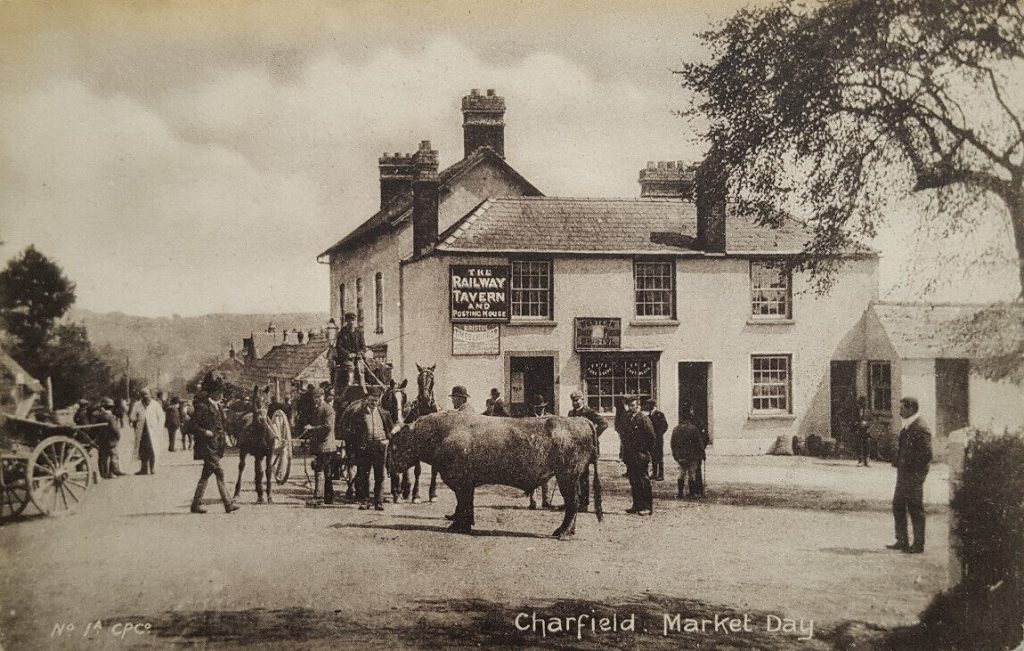
The Railway Tavern was built in the mid 1800’s and was situated next to the railway station on the Bristol to Gloucester (Midland Railway) line.
 Depicted on an 1977 Railway Tavern pub sign above is a representation of a Midland Railway engine. It appears to be a 4-4-0 tank engine of unknown design. Artistic licence or an obscure locomotive class I can’t identify? The number 1832 doesn’t help either as in the LMS numbering system with a prefix of 4, 41832 is a Johnson Midland designed 1F 0-6-0 tank engine bearing no resemblance to the locomotive on the pub sign. The train is on single-track instead of the double track running through Charfield. (pub sign courtesy of the Inn Sign Society, with thanks to Matthew Sproston – archivist)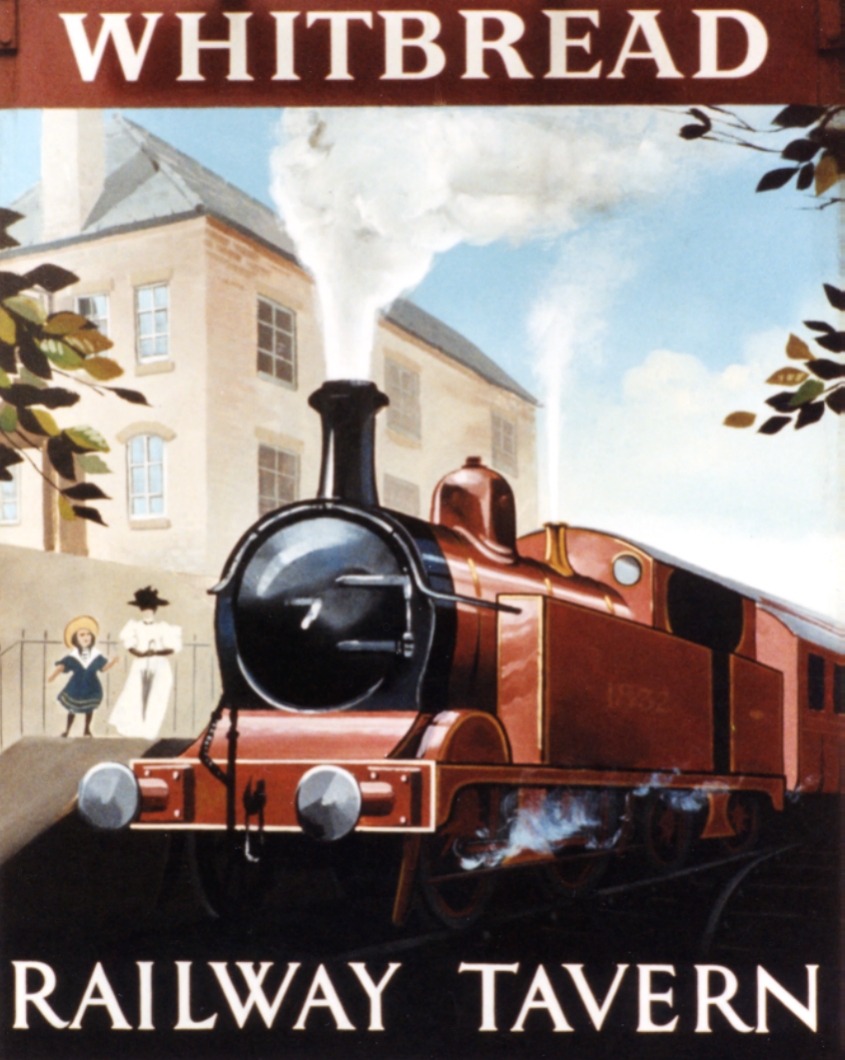
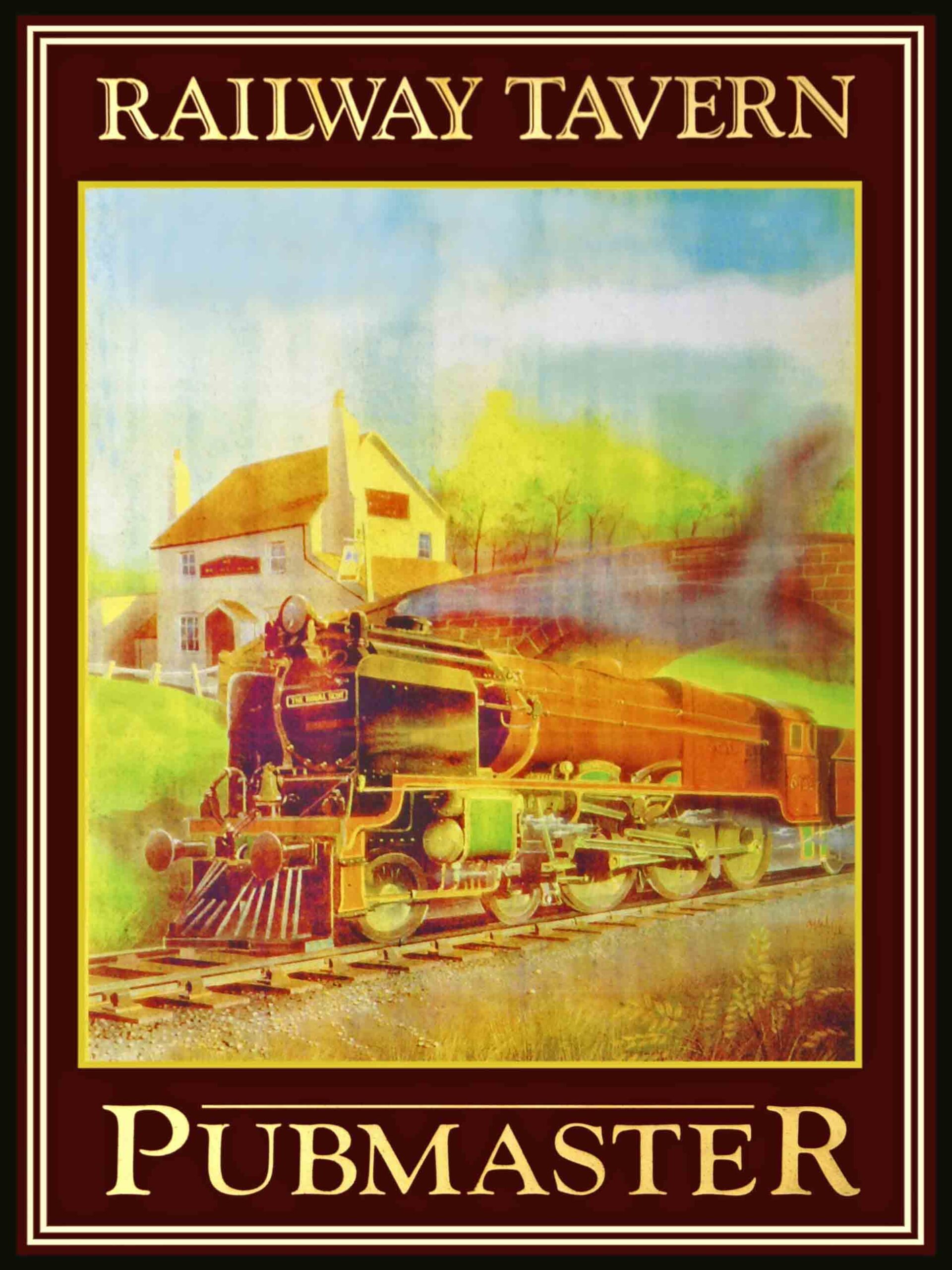
Above: The pub had a replacement sign in 1985 with a similar locomotive, but does this have an 0-6-0 wheel arrangement? Could it be a depiction of a Midland Railway Johnston 0-6-0T, or perhaps a Class 3F ‘Jinty’. (Courtesy Inn Sign Society, thanks to archivist Matthew Sproston)
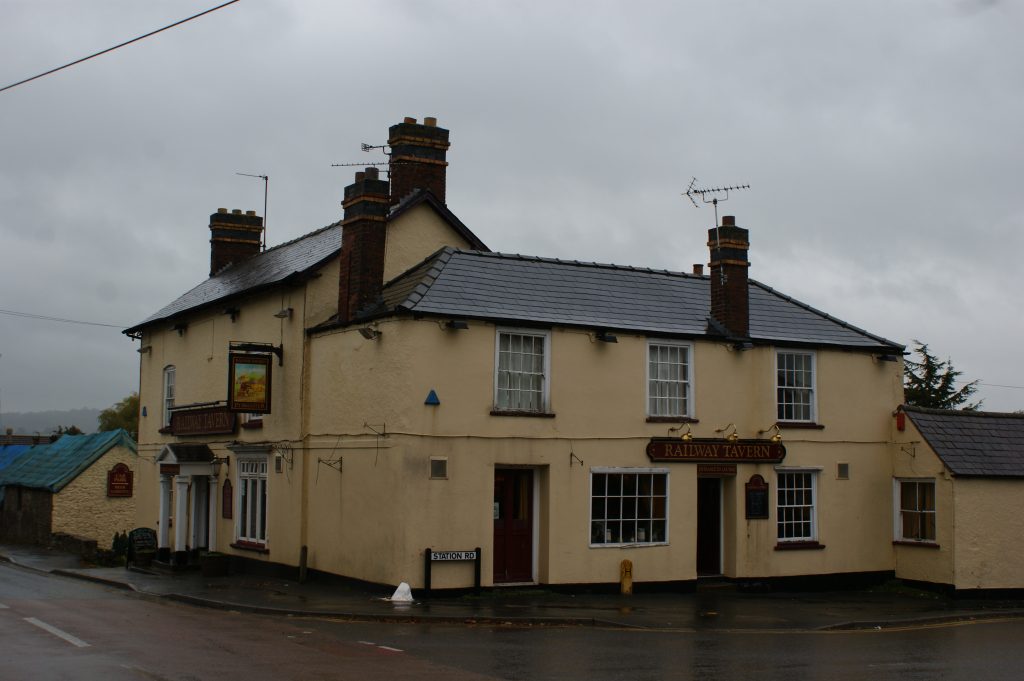
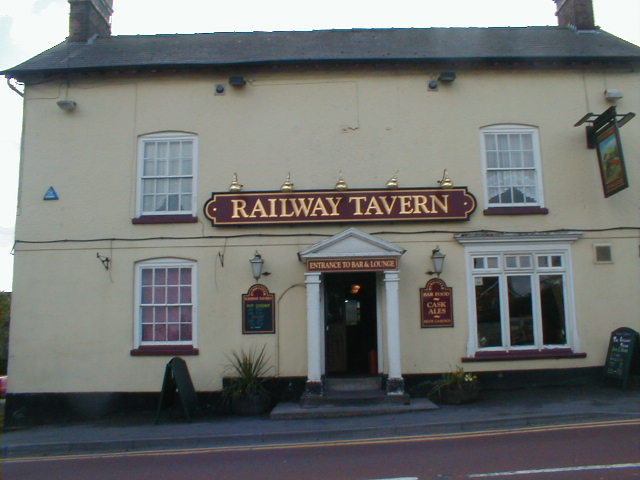
On October 13th 1928 there was a horrific train crash involving three trains when at least fourteen people lost their lives. The pub was used as a temporary mortuary. The ‘Dursley Gazette’ reported on October 20th 1928 that ‘later on Saturday morning the dead bodies and charred remains were placed in an old coach-house at the Railway Tavern and throughout the weekend sorrowing relatives and friends paid visits to this tragic building to make what, alas, often proved to be unavailing search for clues to identity.’
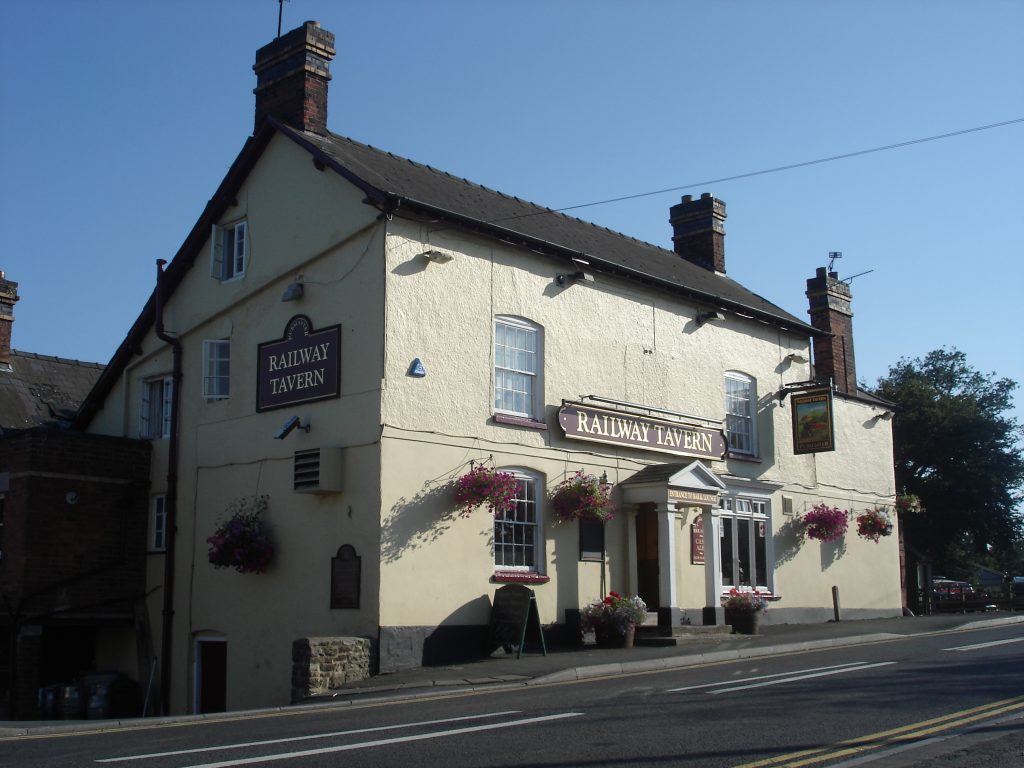
The Railway Tavern was refurbished by Pubmaster in February 2000 and extended into the former flower shop which was under the same roof.
Licensing Details:
Owner in 1891: Arnold Perrett & Co. Ltd., Wickwar Brewery
Rateable Value in 1891: £42.0s.0d.
Type of licence in 1891: Alehouse
Owner in 1903: Arnold Perrett & Co. Ltd., Wickwar Brewery
Rateable Value in 1903: £58.15s.0d.
Type of licence in 1903: Alehouse
Closing time in 1903: 10pm
Landlords at the Railway Tavern include:
1885 George Holloway (1885 – listed as the Commercial Inn)
1891 Geo. Jno. Price Holloway
1903,1919 John Frederick Philpott
1927 John H. Wyatt
1939 Harry Edgar Wild
1999 Martin Redmond
2007 Shirley Tull (Partner of Martin Redmond)