Pubs and Breweries in Gloucestershire Past and Present
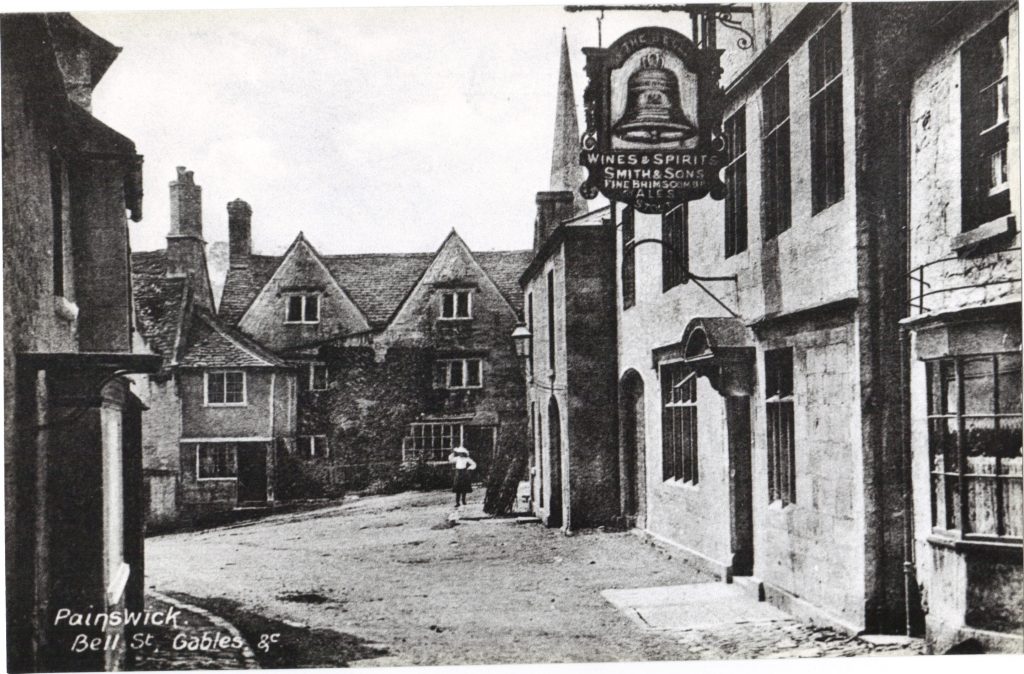
Bell Inn, Friday Street, Painswick GL6 6QJ
The Bell Inn once brewed its own beer. Thomas Skinner & Son are recorded as brewers at the Bell Inn in 1863 and 1885. Smith & Sons of the Brimscombe Brewery had acquired the Bell Inn by 1891.
Gloucester Journal, 10th December 1864 – Shooting at a young woman in Painswick:
James Billings, 23, wood-turner, was charged with shooting, with pistol loaded with gunpowder and shot, at Elizabeth Trow, with intent to murder her, at Painswick, on the 3rd of October; another count charged him with wounding Job Barnfield, with a knife, with intent to resist his apprehension. Mr. Stanton prosecuted; the prisoner was undefended.
James Voice, a beer-housekeeper, living at Painswick, said “I remember the prisoner coming to my house on Sunday, the 2nd of October. He had been living at Painswick; we had some conversation about the prosecutrix. He asked me if I had seen her; he was very violent. He went away, and came again in the evening, and again asked if I had seen the prosecutrix. He said, If so be she played any more pranks with him he would let out something they would not like to hear. If could not have her, no one else should.” On the Monday morning, he came again, had some refreshment, and asked if I had seen the prosecutrix. I said I had not; he came in again and repeated the question. I said I had seen her. with her sister. mother, and two young men, go past about an hour before. I told him to have nothing to say to her at Gloucester, or the old woman would be sure to have him locked up. He said he would try not to do so, but had had disappointment, as the prosecutrix promised to go to Birmingham to him and did not go.
Mr. Wolf Symonds furniture broker, of Westgate Street. On Monday, October 3rd, the prisoner came to my shop and bought a pistol. He came back in the course of the day and I exchanged it for another. The pistol produced is the one the prisoner bought.
Elizabeth Neale: I am the wife of Frederick Neale, who keeps the Bell Inn, Painswick. On Monday evening, the 3rd of October, the prisoner came to my house. He produced a pistol and asked for a gun screw to draw a piece of paper out of it. He was told to put a cap on it and blow it out He said be could not, though he had fired off three caps. He afterwards got the paper out with a fork. He produced some large shots, sand asked if they would kill a man. and was told they would. He left soon afterwards.
Elizabeth Trow: I am single woman, and live with my mother, at Painswick; I know the prisoner, and knew him about 15 months before Gloucester Mop; in the early part at the the time I knew him he was keeping company with me; on the 17th of August I gave him to understand I wished him to cease paying his addresses to me; he told me that if he did not have me no one else should; I sent him a letter to Birmingham; he afterwards came to see me; that was when he told me that If he did not have me no one else should; I kept company with him again; we wrote to one another; he did not come to my mother’s house; I kept company with him again because he threatened me; I did not afterwards see him till the 3rd of Oct. when I went to the Mop; my mother and sister and two young men were with me. In a letter the prisoner had sent me he enclosed postage stamps for me to go to Birmingham. At the Mop I saw the prisoner in Barton Street: I saw the butt end of a pistol in his pocket; I did not speak to him; about seven I started for home, and reached Painswick about half-past nine o’clock; a little outside of the town I saw the prisoner; when he saw me he ran and discharged a pistol at me; that was at about fifty yards from my home ; when he discharged the pistol he was about five yards from me; I felt something hit my bonnet; there was a flash in my face; I then went on into the town; Job Barnfield took hold of the prisoner.
Prisoner: Had you any mark from the shots? Prosecutrix: A piece of ribbon was blown off my bonnet.
Philip Barnfield, cowman, living at Cranham, said I went to Gloucester Mop the 3rd of October with the prosecutrix and others. I saw the prisoner the Mop. I returned to Painswick with the prosecutrix and her mother and the others. Just outside Painswick the prisoner came up, and when within five yards of Elizabeth Trow he fired a pistol. Job Barnfield corroborated the evidence of the last witness. He took hold of the prisoner, and while he was struggling with him the policeman came up.
Police Constable Davis, of Painswick; On the evening of the 3rd of October I was fetched, at a quarter to ten o’clock, to the prisoner, whom I found being held down by Job Barnfield, and arrested him. A pistol and knife were given to me. At the station I found in the prisoner’s waistcoat pocket some powder and shot.
The prisoner’s statement before the magistrates was put in. He stated that he bought the pistol eighteen months before and intended the powder and shot for killing birds. He did not follow the prosecutrix. While he was in Birmingham, he did not know she had deserted him for another. While walking along the road to Painswick he saw the girl walking with Job Barnfield. He called to them, but they ran away. He ran after them, and falling over some stones the pistol went off. He accidentally, not purposely, used the knife, and cut Barnfield, who was holding him down.
In defence the prisoner now made a long statement, in the course of which he gave a history of his connexion with the prosecutrix, stating that she wished to come to him, as she said their intimacy was talked about so much in Painswick, and that he sent her 5s. worth of stamps to come by an excursion train, of which she informed him; and he waited two hours for her at the railway station. He then came to Painswick, bringing the pistol with him, and went with others to shoot birds. He came to Gloucester on the Monday with other young men, one of whom got him to go into a shop and buy a pistol, which he might use. They all then went on to the Upton Road and shot at a mark for a wager of some beer. The nipple of the young man’s pistol broke, and he (prisoner) took it back and changed it. They then went towards Painswick, and he saw the prosecutrix and her party on the road, and called after them, but they ran away. He ran after them, and was seized by Philip Barnfield, whom he struck with a stick, and in the struggle on the ground the pistol, which was in his pocket exploded accidentally.
The Judge in summing up characterised the prisoner’s statement as to the discharge of the pistol very improbable. There was no doubt he fired the pistol. With what intent? Did he purposely aim over the girl’s head, or did he aim at her and miscalculate his elevation?
The jury found the prisoner guilty of shooting with intent to do grievous bodily harm.
The judge said the jury had taken a lenient and charitable view of the case. It was a most abominable offence, and if the jury had found the prisoner guilty of intent to murder he would have been sentenced to penal servitude for life. What right had he to force a woman against her will in this way? Was a woman to be driven to marry man to save herself from being murdered? It seemed to him a sort of fashion now that when men were rejected—very often through their own misconduct—they should take revenge of this kind. He sentenced the prisoner to 15 years’ penal servitude.
The above research and information courtesy Dr. Martyn Beaufort
Gloucester Journal, October 1887: Whereas on the evening of the 24th of September last, was left at the Bell, in Painswick, an aged bay-horse, about 15 hands, with the near leg before and hinder legs white, a star in the forehead; the man going off in the morning without paying his reckoning; it is supposed the horse is stolen; any person proving it their property, may have it again, on defraying the expenses, by applying at the Bell aforesaid.
Gloucester Journal, Saturday 26th June 1926 – County Compensation Authority: The principal meeting of the Compensation Authority for the County of Gloucester was held at the Shire Hall, Gloucester, on Thursday, when Sir Francis Hyett presided, the purpose being to confirm or otherwise the reference by licensing justices of certain premises for compensation under the Licensing (Consolidation) Act. 1910, and to renew or refuse the licenses accordingly.
The licence of the Bell Inn, Painswick, an alehouse, was refused for renewal and referred for compensation. Mr A.H. Grant Heelas appeared for the Stroud justices and Mr. G. Trevor Wellington, the owners Messrs. Godsell & Sons Ltd. and the licensee, Herbert Howell.
I received an email from Eril Jolly in Australia who told me that his ancestors were inn-keepers in Painswick. James B. Pegler is listed as landlord at the Bell in 1820 and 1830. His father, Leonard Pegler, was a victualler in Painswick from at least 1791 until his death in 1806 and his wife Elizabeth (James’ step-mother) also described herself as a victualler in 1817. She died in 1819 and Eril thinks that it is possible that they all had connections with the Bell.
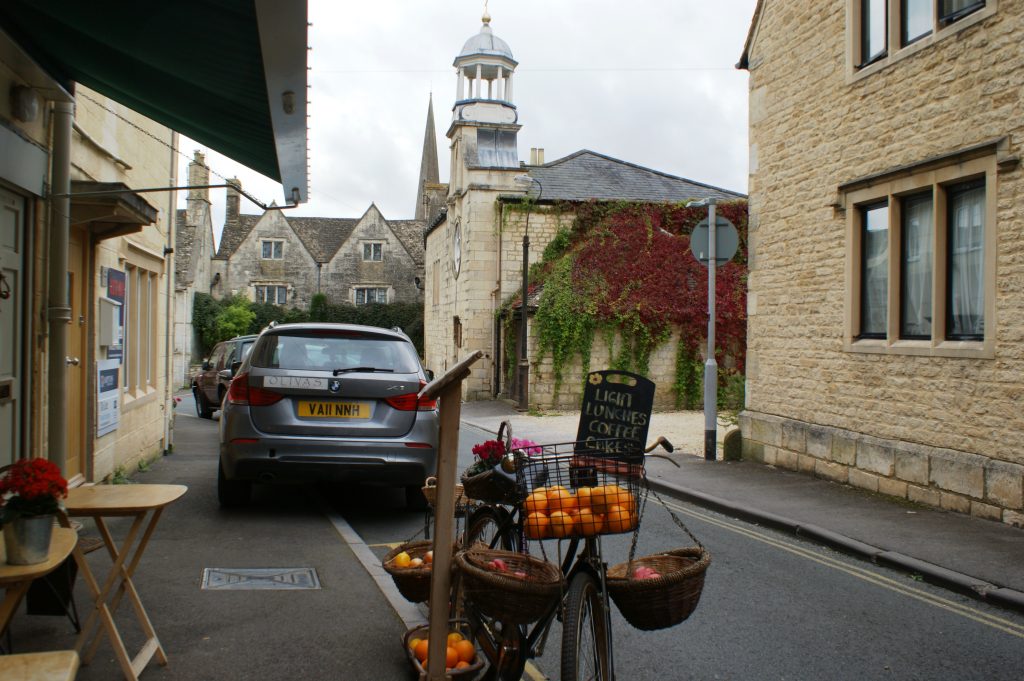
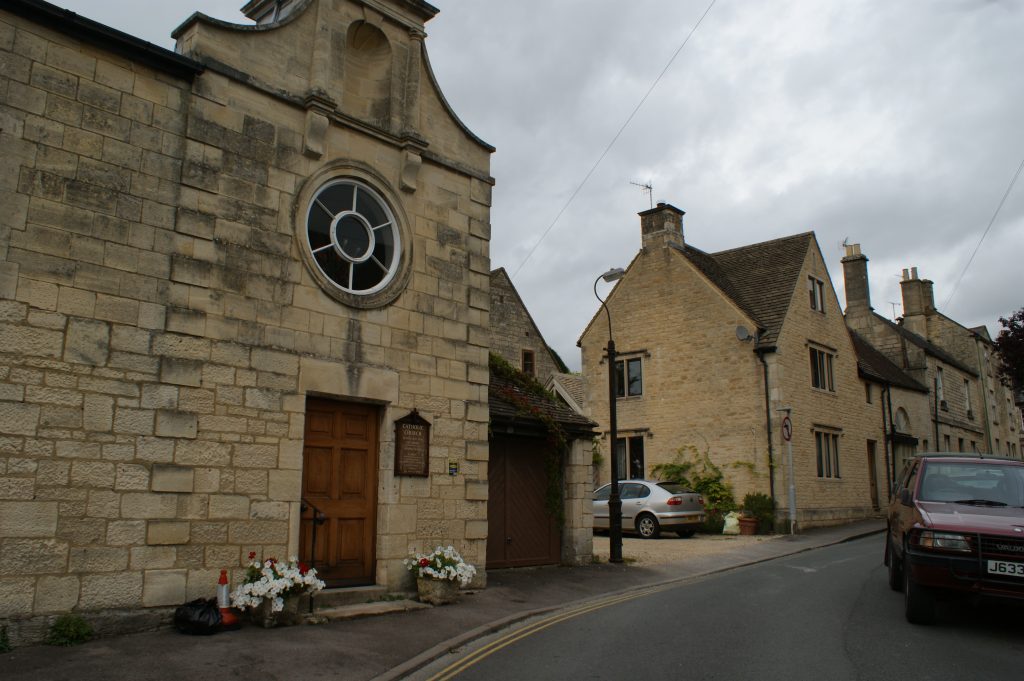
On the night of 14th of June 1941 Friday Street in Painswick took a direct hit by a stray German bomb, demolishing the building that was once the Bell Inn, surrounding houses and chapel. It is thought that the air attack was targeted at the Glo’ster Aircraft Company further to the north at Brockworth.